
The Ultimate Guide to NavaRatna Gemstones: Scaling Your Business to New Heights

Have you ever felt like your business has hit an invisible ceiling? You’ve got the strategy, the team, and the drive, but for some reason, the next level of growth feels just out of reach. In the high-stakes world of entrepreneurship, we often look to the latest tech or management theories to find our edge. But what if the key to unlocking your full potential: and the potential of your company: lay in the cosmic alignment of your personal energy?
At 360 Real Astrology, we believe that business success isn’t just about working harder; it’s about working in harmony with the universe. Enter the NavaRatna gemstones, an ancient system of nine powerful stones designed to balance your planetary influences. Today, we’re diving deep into how these gems, particularly the majestic Yellow Sapphire and the formidable Blue Sapphire, can transform you into a leader capable of scaling mountains.
The Plateau: Why Scaling Your Business Feels Like an Uphill Battle
Scaling a business is inherently a leadership challenge. As your company grows, the decisions get tougher, the stakes get higher, and your personal energy becomes the bottleneck. Many business owners struggle with:
- Decision Paralysis: Fearing the wrong move could jeopardize everything.
- Lack of Vision: Getting so bogged down in daily operations that you lose sight of the big picture.
- Leadership Gaps: Finding it hard to command respect or inspire a growing team.
- Financial Stagnation: Seeing opportunities but lacking the "luck" or timing to seize them.
In astrology, these aren't just "business problems": they are energetic imbalances. If your Jupiter (the planet of expansion) or your Saturn (the planet of discipline) isn't well-supported, your leadership will inevitably suffer.
The NavaRatna System: Your Cosmic Board of Directors
The word "NavaRatna" comes from the Sanskrit words for "nine gems." Each of these stones is linked to a specific celestial body in our solar system. Think of them as your cosmic board of directors. While all nine work together to provide a shield of protection and a magnet for prosperity, two stones stand out as the ultimate power players for any CEO or business leader.

Yellow Sapphire (Pukhraj): The Stone of Wise Leadership
If you want to be a leader who leads with wisdom, integrity, and a sense of abundance, you need to understand the Yellow Sapphire benefits. Linked to the planet Jupiter (Guru), this stone is the ultimate catalyst for expansion.
Jupiter is the "Great Benefic" in astrology. It governs wealth, higher education, and justice. When you wear an authentic Yellow Sapphire, you are essentially inviting the energy of Jupiter to guide your strategic thinking.
How Yellow Sapphire helps you scale:
- Expansion Mindset: It helps you move past "scarcity thinking" and start making decisions based on growth and abundance.
- Reputation & Respect: Jupiter is the planet of the teacher. Wearing this stone enhances your aura, making you appear more trustworthy and authoritative to your employees and investors.
- Financial Wisdom: It doesn’t just bring money; it brings the wisdom to manage and multiply it.
Blue Sapphire (Neelam): The Authority of the Strategist
While Yellow Sapphire expands, Blue Sapphire astrology is all about structure, discipline, and rapid results. Linked to Saturn (Shani), Blue Sapphire is often misunderstood as a "scary" stone, but for a business leader, it is a secret weapon.
Saturn is the taskmaster of the zodiac. It governs long-term stability, hard work, and administrative power. If your business feels chaotic, or if you find it hard to implement systems, Blue Sapphire can provide the grounding force you need.
How Blue Sapphire helps you scale:
- Mental Clarity: Saturn clears the fog. It helps you see through distractions and focus on the one thing that will move the needle.
- Protection from Losses: Saturn is a guardian. Many entrepreneurs find that wearing a Blue Sapphire protects them from legal issues, bad partnerships, and sudden financial dips.
- Commanding Presence: It gives you the "weight" of authority. People listen when a Saturn-empowered leader speaks because they sense the discipline and resolve behind the words.
The Non-Negotiable: Why Only Authentic Gemstones Deliver Results
In your business, you wouldn't settle for counterfeit software or fake financial reports. Why would you settle for a synthetic gemstone?
At 360 Real Astrology, we cannot stress this enough: authentic gemstones are the only way to tap into planetary energies. A lab-grown or treated stone is just a piece of jewelry. It lacks the crystalline structure and "prana" (life force) that a natural stone develops over millions of years deep within the earth.
Wearing a fake stone is like trying to run a high-performance engine on watered-down fuel: it just won't work, and it might even cause damage. We source our stones with scientific precision and ancient Egyptian wisdom to ensure you get the real deal. You can explore our selection of certified natural stones in our shop.

Practical Advice: How to Use These Power Stones
Before you rush out to buy a ring, remember that these are powerful tools. You wouldn't perform surgery on yourself, and you shouldn't "self-prescribe" gemstones without a professional birth-chart analysis.
Yellow Sapphire (Pukhraj) Guidelines
- Planet: Jupiter
- Metal: Yellow Gold is best to conduct Jupiter’s warmth.
- Finger: Index finger (the finger of authority and direction).
- Day to Wear: Thursday mornings during the waxing moon.
- Warning: Avoid wearing it with Blue Sapphire unless specifically recommended by an expert like Astrologer Musa Hossain, as Jupiter and Saturn have a complex relationship.
Blue Sapphire (Neelam) Guidelines
- Planet: Saturn
- Metal: Silver, Platinum, or White Gold.
- Finger: Middle finger (the finger of karma and balance).
- Day to Wear: Saturday evenings or mornings.
- Warning: Blue Sapphire is incredibly fast-acting. We always recommend a "trial period" where you keep the stone near you or taped to your arm to see how your energy reacts before setting it in a ring.
How 360 Real Astrology Helps You Co-Create Your Success
We don't just sell stones; we provide a roadmap for your life and business. Our approach combines the deep roots of ancient Egyptian astrology with modern scientific verification.
When you book a consultation with us, we don't just tell you your future: we help you build it. We look at your 10th house (Career) and 11th house (Gains) to see exactly which NavaRatna gemstones will remove your specific barriers. Whether you need the leadership boost of a Yellow Sapphire or the structural discipline of a Blue Sapphire, we ensure the stone is perfectly aligned with your cosmic blueprint.

Frequently Asked Questions (FAQ)
1. Can I wear both Yellow and Blue Sapphire together for my business?
Generally, Jupiter and Saturn are neutral to each other, but wearing them together requires a very specific placement in your birth chart. Doing so without a consultation could lead to conflicting energies where you try to expand (Jupiter) and restrict (Saturn) at the same time, causing stagnation.
2. How long does it take to see results from a Yellow Sapphire?
Yellow Sapphire is a stone of gradual, stable growth. Most clients report a shift in their mindset within 30 days, with tangible business opportunities appearing within 3 to 6 months of consistent wear.
3. Is Blue Sapphire dangerous if it doesn't suit me?
"Dangerous" is a strong word, but it can be uncomfortable. If Saturn is ill-placed in your chart, a Blue Sapphire might bring sudden challenges or mental stress. This is why a professional consultation at 360 Real Astrology is essential.
4. Why are authentic gemstones so expensive?
Natural, untreated gemstones are rare. Their price reflects their scarcity and the energy they carry. Think of it as a long-term investment in your personal and professional infrastructure.
5. Do I need to wear all nine NavaRatna stones?
Not necessarily. While a NavaRatna pendant or ring is great for general balance, focusing on 1 or 2 "power stones" tailored to your birth chart is often more effective for specific goals like scaling a business.
6. Which finger is best for leadership?
The index finger is traditionally associated with Jupiter and leadership. Wearing a Yellow Sapphire here helps you point the way for your team and command respect.
7. Can gemstones really help me scale my business?
Gemstones act as bio-feedback tools for your energy. By balancing your planetary influences, they help you stay calm, focused, and intuitive: the exact qualities needed to make the big decisions that lead to scaling.
Conclusion: Lead with the Stars on Your Side
Scaling a business to new heights requires more than just a good spreadsheet; it requires a leader who is energetically aligned with success. By leveraging the power of NavaRatna gemstones, specifically the wisdom of Yellow Sapphire and the discipline of Blue Sapphire, you can remove the cosmic barriers holding you back.
Don't leave your leadership journey to chance. Ensure you are using authentic gemstones that are scientifically and astrologically right for you. Start your transformation today by scheduling a personalized birth-chart reading with our experts. Let's co-create the empire you were born to lead.
About Me:

Musa Hossain, A Modern Astrologer, Palmist, Occultist Scientist and Gemologist
Our Astrological Gemstone
-
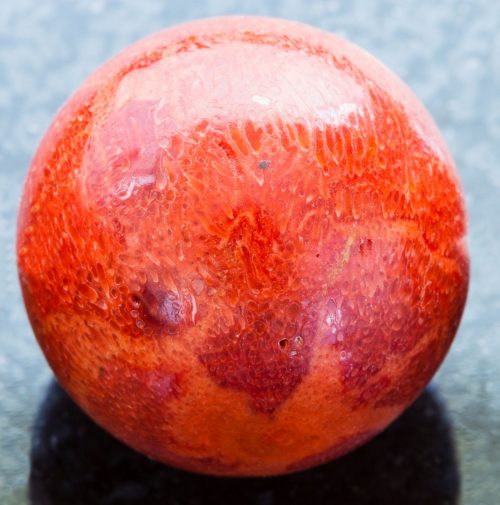 Natural Red Coral
Price range: $225.00 through $400.00
Natural Red Coral
Price range: $225.00 through $400.00
-
 Natural Blue Sapphire
Price range: $1,500.00 through $3,000.00
Natural Blue Sapphire
Price range: $1,500.00 through $3,000.00
-
 Natural Sea Pearl
$400.00
Natural Sea Pearl
$400.00
-
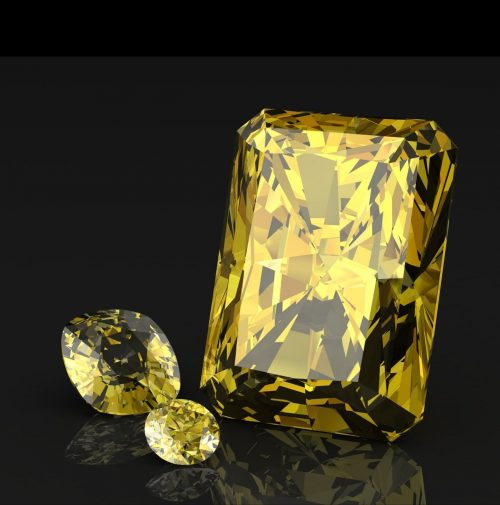 Natural Yellow Sapphire
Price range: $350.00 through $650.00
Natural Yellow Sapphire
Price range: $350.00 through $650.00
-
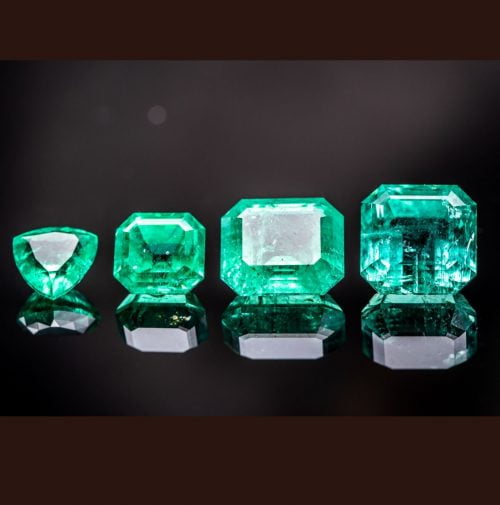 Natural Emerald Gemstone
Price range: $300.00 through $550.00
Natural Emerald Gemstone
Price range: $300.00 through $550.00

Connect me