
Depression, Anxiety & Astrology: What Your Birth Chart Is Trying to Tell You
This short guide looks at how Ketu in your birth chart can link to periods of anxiety, low mood, and emotional reactivity — and why those phases do not have to define your life. We blend mythic meaning with practical steps so you can read your chart without fear.
In Vedic astrology, Ketu is a shadow planet tied to detachment and spiritual focus. It often pulls attention away from material aims and toward inner work. Its Mahadasha runs about 18 years and it crosses signs roughly every 18 months, shaping long arcs in a person’s journey.
This article will map symbolic themes (nakshatras, house placement, Moon ties) to common emotional patterns. We’ll explain the Rahu‑Ketu axis, show how letting go can precede major life shifts, and offer routines that mix evidence‑based self-care with spiritual remedies.
Tone: friendly, practical, and respectful of tradition, with clear steps for mental wellness today.
Key Takeaways
- Ketu often signals a pull toward detachment and inner work, not just loss or illness.
- Placement, house, and nakshatra shape how symptoms appear in a horoscope.
- The Rahu‑Ketu axis can mark turning points that feel disruptive but lead to growth.
- Combine proven routines (sleep, therapy, meditation) with spiritual practices for best impact.
- Understanding your birth chart helps you contextualize difficult feelings and find practical steps.
Why Ketu matters when you’re struggling emotionally
If you feel numb, withdrawn, or less driven, your horoscope can point to forces that favor inner work over outer gains.
The symbol at play often represents detachment, spiritual focus, and a tamasic, otherworldly quality. That energy can pull you from the pursuit of material goals onto a different path.
When that pull grows strong, people commonly report numbness, anhedonia, and social withdrawal. These symptoms can look like a loss of motivation rather than a static mood disorder.
Connection with the moon matters. If the Moon is entangled with this influence, emotional volatility and anxiety tend to rise. Gentle routines and clear boundaries help steady the mind.
Results depend on placement and company in the chart. A house, sign, aspect, or nakshatra can intensify sensitivity or open a route to insight and resilience.
- Short-term: loss of drive, confusion, identity questions.
- Mid-term: career reevaluation, shifting values.
- Long-term: deeper clarity and spiritual growth if supported.
| Significance | Common Experience | Support |
|---|---|---|
| Detachment | Numbness, less interest in material things | Therapy + grounding spiritual practice |
| Moon link | Anxiety, mood swings | Sleep routine, emotional boundaries |
| Chart factors | Varied sensitivity by house and nakshatra | Chart reading + practical coping |
Remember: blending clinical care with spiritual practices reduces immediate impact and helps realign life toward meaning. We’ll map placements and timing next so you can match experience to chart details.
From churning the ocean to eclipses: the mythic origins and symbolism of Ketu
A dramatic myth from the churning ocean explains how two shadowy forces were born and why they matter.
Lord Vishnu, the demon’s beheading, and the birth of Rahu & Ketu
During the Samudra Manthan a demon disguised himself among the gods and drank the nectar of immortality.
The Sun and Moon spotted him and alerted lord vishnu, who used the Sudarshan Chakra to behead the intruder.
The immortal head became Rahu and the torso became Ketu; together they explain ancient accounts of lunar and solar eclipses.
The head and the tail: what “torso” and “headless” imply for the mind
As the tail or torso of the celestial snake, Ketu carries a headless quality: less calculation, more instinctive cutting away.
This image—also known in hindu mythology as the dragon’s tail—signals endings, release, and hidden power.
- Samudra Manthan: a demon drinks nectar, Sun and Moon expose him, and lord vishnu beheads him.
- Symbolism: the tail suggests swift detachment rather than steady reasoning.
- Eclipses: the nodes “swallow” the Sun and Moon, reflecting brief loss of clarity before light returns.
| Element | Mythic Meaning | Psychological Image |
|---|---|---|
| Head (Rahu) | Thirst for experience, desire | Ambition, fixation |
| Torso/Tail (Ketu) | Detachment, release | Sudden letting go, instinctive change |
| Sun & Moon | Ego and mind | Moments of humiliation or insight during eclipses |
These myths map clearly onto chart psychology and set the stage to read how placements and timing play out in a real horoscope.
How Ketu acts in Vedic astrology: shadow planet, South Node, and the path to liberation
In Vedic astrology the South Node marks where the Moon’s orbit crosses southward. Astronomically it is a point, not a physical body, yet astrologers treat it like a shadow planet that shapes life themes.
Rahu and the opposite node form the axis that balances appetite and release. The rahu ketu polarity points to where we chase experience (Rahu) and where we must let go (the South Node). That polarity maps karmic lessons and a personal path toward presence.
The node’s nature is tamasic and otherworldly. In practice this can blunt interest in status, stuff, or busy noise, freeing energy for inner focus. It acts like a headless impulse: less mental rumination, more sudden cutoffs.
This “headless” way often feels like brain fog at first, then clarifies by subtraction. Results depend on house, sign, dignity, nakshatra, and aspects from other planets. Benefic links ease the edge and deepen practical wisdom.
Tip: look to the three nakshatras this node rules—Ashwini, Magha, and Moola—for clues about healing, legacy, and root transformation. Treat difficult events as invitations to realign with values, not random setbacks.
Ketu and the Moon: decoding anxiety, depression, and emotional reactivity
A Moon‑node connection often shows up as mental fog, sudden mood dips, and a sense of being unmoored.
The Moon governs mind and mood in astrology. When it engages the shadow node, feelings can swing faster and attention can thin.
Mind, mood, and nodes: when the Moon engages the node
Common experiences during such a period include brain fog, trouble focusing, and feeling “somewhere else.”
People also report spikes in worry, avoidance, and short bursts of low affect.
- Somatic signs: headaches or sleep disruption; seek medical care if disease indicators appear.
- Supportive routines: steady sleep, breathwork, gentle exercise, therapy, and calming mantra.
- Self‑care needs: softer schedules, compassionate self‑talk, and fewer social demands.
| Issue | Typical sign | Practical support |
|---|---|---|
| Attention | Brain fog, distraction | Short walks, breathwork, therapy |
| Emotion | Anxiety, low affect | Sleep routine, mantra, counseling |
| Body | Headaches, tiredness | Medical check, mindful routines |
Each person’s response depends on Moon sign, house, and proximity to the node in their horoscope. Track mood over lunar cycles and note which settings or relationships worsen reactivity.
“Reach out to a trusted friend or a professional when inner weather shifts quickly — a grounding presence helps.”
Small, steady practices can ease the edge and help you live more steadily in daily life.
Ketu in the houses: birth chart placements that color mental health
Placement by house shows where inner detachment becomes visible in daily life. Below are practical notes on common patterns and supports.
First house: identity, detachment, and mood instability
First house placements can alter sense of self. Marks on the face and early identity confusion are common.
Over time this can settle into humility and clearer values.
Fourth house: home, family security, and inner peace
Home may feel shaky. Grounding rituals, simple domestic routines, and clear boundaries help steady family resources.
Fifth house: creativity, joy, and anxious expression
Creativity might feel blocked or nervy. Try journaling, low-stakes projects, and outdoor time to restore play.
Sixth, eighth, tenth, and twelfth houses: stress, transformation, career, and solitude
- Sixth: daily stress and disease risk can rise; yet courage to simplify routines often grows.
- Eighth: chronic patterns or fear emerge; trauma-informed therapy and breathwork aid transformation.
- Tenth: career wobble or humiliation may lead to rebuilt self-worth and a truer vocation.
- Twelfth: sleep and solitude intensify; prioritize sleep hygiene, therapy, and gentle mantra.
Note: planets aspecting the node, and the chart’s dignity, change outcomes. Benefic links protect mental well-being while guiding growth in life and vocation.
| House | Common issue | Practical support |
|---|---|---|
| 1st | Identity confusion | Therapy, grounded routine |
| 6th | Daily stress / disease | Health check, simplify tasks |
| 12th | Isolation, sleep | Sleep hygiene, mantra |
Nakshatras ruled by Ketu: Ashwini, Magha, and Moola
These three nakshatras show where release and inner work become visible in a chart. Each one brings distinct energy that affects mood, motivation, and the shape of healing. Below are practical notes and short wellness tips designed for daily use.
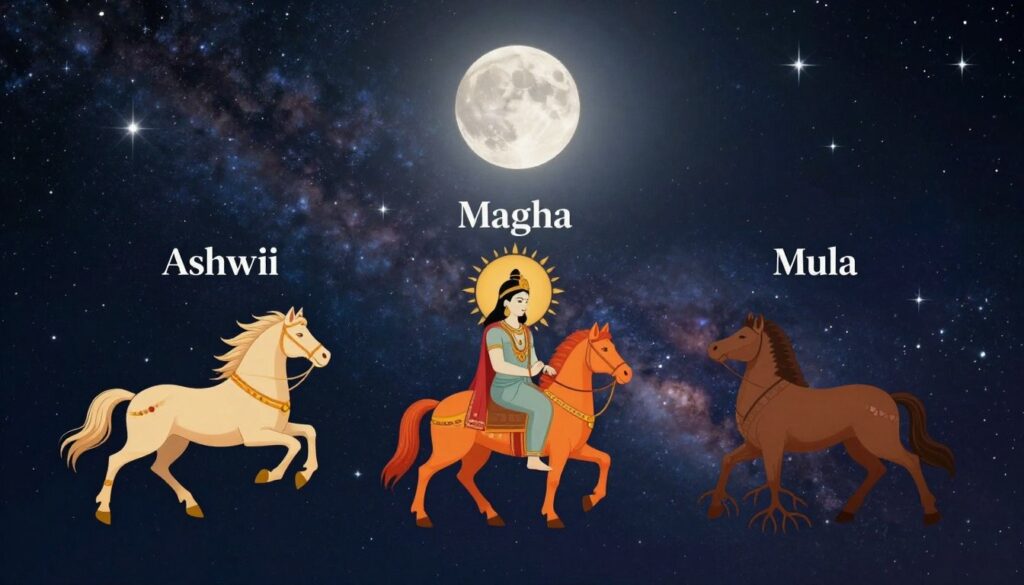
Ashwini: healing, initiation, and nervous energy
Ashwini encourages quick starts and first‑aid style healing. People with strong placement feel jittery but driven to reset routines.
- Practical: channel nervous energy into breath-led movement and early-day rituals.
- Mental wellness tip: short runs, cold splash, or brief meditations help without overthinking.
Magha: power, legacy, and pressure on the ego
Magha highlights authority and lineage. It can bring pressure to perform and tests of the ego.
- Practical: balance leadership with mentorship and humble service.
- Mental wellness tip: regular digital detox and mentoring others reduce performance anxiety.
Moola: root-level upheaval and inner transformation
Moola digs up old beliefs and buried fears. This clearing can be intense but is often liberating when guided.
- Practical: seek trauma-aware support and somatic practices.
- Mental wellness tip: gentle study of spiritual texts and slow bodywork stabilize deep change.
| Nakshatra | Key theme | Daily support |
|---|---|---|
| Ashwini | Initiation, healing | Short practices, breath movement |
| Magha | Power, legacy | Mentorship, digital detox |
| Moola | Root clearing, transformation | Somatic therapy, gentle study |
Across all three: develop steady knowledge through small, regular practice rather than perfectionism. The planet ketu influence asks for detachment as a path to meaning.
“Letting go of excess control often invites aligned opportunities.”
Rahu‑Ketu polarity reminds us that healthy detachment supports destiny and a truer way of life.
Ketu Mahadasha and periods: separation, loss, and the seeds of freedom
An 18-year mahadasha often brings abrupt endings that feel harsh at first and revealing later. This long planetary period strips back roles, status, and routine so inner priorities can emerge.
Common themes
Typical motifs: separations in relationships, career setbacks or unemployment, loss of status, brain fog, and occasional health risk.
Many people notice humiliation or an ego-crash that forces reassessment. These hits can feel unfair, yet they often clear what blocks growth.
Letting go vs. pushing harder
The paradox: the more a person clings, the stronger resistance becomes. Non-action and calm surrender usually ease anxiety faster than forcing outcomes.
- Reframe job loss as a reset and reduced money flow as a chance to simplify.
- Right-size commitments: shorter to-do lists, calm mornings, realistic timelines.
- Use spiritual anchors—mantra, prayer, service, and steady study—to hold perspective.
| Experience | Typical sign | Practical response |
|---|---|---|
| Separation / breakup | Grief, relief, identity shift | Short routines, counseling, trusted friends |
| Career setback / unemployment | Loss of role, money squeeze | Reskill in small steps, simplify budget, network |
| Brain fog / health | Low focus, swelling worry, possible disease signs | Medical check, sleep hygiene, gentle practice |
“Acceptance doesn’t mean giving up; it means choosing where to put your energy.”
Care caveat: seek medical and mental-health support if symptoms persist. Try journaling prompts today: “What am I being asked to release?” and “Which small daily practices make me feel lighter?”
Remedies and supports for a difficult Ketu phase
If a nodal turn feels destabilizing, use steady practices that combine ritual with self‑care. Start small and repeat daily so intention builds into habit. One traditional starting point is the planet ketu beej mantra: Om Kem Ketave Namah.
Mantras and simple recitations
Practice the beej mantra, plus a Ketu Gayatri or Puranokta chant for short, calm sessions. Three to eleven repetitions in the morning helps cultivate clarity and steadiness of mind.
Offerings and donations
Donate sesame seeds, bananas, or a black blanket to the needy. Consistent, humble giving builds compassion and eases sharp edges of the node.
Sacred tools, puja, and service
Consider a Ketu Yantra in a quiet corner and consult an expert before using Cat’s Eye (Lehsunia). A Ketu Graha Shanti puja, worship of Ganesha with Durva grass, and honoring Matsya can all be stabilizing rituals.
- Compassion in action: feed street dogs — this practical service soothes the heart and aligns remedy with real care.
- Support: 9 Mukhi Rudraksha is used traditionally for protection; seek qualified advice before wearing.
- Practical pairing: pair rituals with hydration, short walks, therapy, and quiet study to restore wealth of well‑being and knowledge today.
Living with Ketu today: practical ways to align mind, money, and life with detachment
Living through a nodal phase asks you to rework daily habits so inner steadiness replaces constant striving. This is a way to translate the chart’s call for detachment into concrete habits.
Downshift ambition and protect mental health. Slow your schedule, add buffer time between commitments, and prioritize sleep. Say no to tasks that drain you; protect recovery as seriously as work.

Redefine success and reclaim personal power
Redefine success away from growth for its own sake. Value relationships, restful routines, and service as markers of true success.
Reclaim power by choosing small, controllable actions: daily walks, a therapy appointment, and limited social media. These restore calm and practical agency in a changing world.
Simple spiritual routines that stabilize the nervous system
Build short practices: a morning mantra, ten minutes of breathwork, brief sitting meditation, and one line of gratitude. Repetition matters more than length.
- Practice financial minimalism: cut unused subscriptions, cook at home, and set a lean budget for uncertain time.
- Align your space with values: declutter, keep a small altar, and select nourishing books and music.
- Time-block work and rest; honor energy ebbs instead of forcing output.
“Each grounded choice is a form of success when the chart asks you to let go.”
| Area | Action | Benefit |
|---|---|---|
| Ambition | Shorten to-do lists | Less burnout |
| Money | Lean budget | Reduced anxiety |
| Mind | Daily mantra + breathwork | Steadier mood |
Conclusion
In myth and chart, the headless torso teaches that loss often clears space for a quieter, truer life.
Ketu and the Rahu‑Ketu axis show how one planet draws you to experience while the other frees you from overattachment. What feels like ending can become a doorway to meaning, less material clutter, and deeper purpose.
Map the node’s house, nakshatra, and aspects in your horoscope to personalize supports. Use steady routines, simple mantras, small acts of service (feed animals, donate), and clear medical or mental‑health care when disease or distress appears.
Respond to the head/tail symbolism with decisive yet gentle cuts, open hands, and patient heart. Even under eclipses, the sun returns — each modest step is real success on your path.
FAQ
What does the birth chart reveal about depression and anxiety?
A birth chart maps planetary placements and angles that influence temperament and stress response. Key factors include the Moon (emotions), its aspects, and the nodes of the Moon, which point to patterns of attachment and detachment. These placements can highlight predispositions to mood swings, chronic worry, or resilience, helping you understand triggers and healthier coping strategies.
Why does the south node of the Moon matter when you’re emotionally struggling?
The south lunar node represents past habits, instinctive reactions, and emotional patterns that feel natural but can be limiting. When strongly placed in a chart, it can intensify withdrawal, numbness, or avoidance. Recognizing its influence helps you shift from reactive behaviors toward more balanced responses and intentional self-care.
How do the mythic origins of the nodes relate to mental patterns?
In Hindu mythology, the nodes arise from a cosmic beheading during the churning of the ocean, symbolizing division between head and tail. This duality reflects how the mind can split between conscious identity and hidden drives. The story frames why people experience sudden fears, obsessions, or a sense of being unmoored—ancient symbols for modern psychological states.
What does a "headless" or "torso" symbol imply for the mind?
The imagery of a headless torso suggests detachment from ego and conventional reasoning. In psychological terms, this can show up as dissociation, unclear decision-making, or a profound inner focus that neglects outer responsibilities. It can also indicate potential for spiritual insight once grounding practices are applied.
How does the south node function in Vedic astrology as a shadow planet?
As a shadow point, the south node highlights karmic habits and areas where growth requires release rather than accumulation. It often pushes toward renunciation of material attachments or compulsive patterns. In practical terms, its energy can create internal conflict between comfort-seeking and the need for transformation.
What happens when the Moon connects strongly with the south node in a chart?
When the Moon engages the south node, emotional reactivity increases. People may experience intense mood swings, hypersensitivity, or a tendency to retreat. Sleep disturbances and rumination are common. Therapeutic routines, steady emotional boundaries, and mindful practices can reduce volatility.
Which house placements most affect mental health and why?
Certain houses strongly color inner life: the First (identity and mood), Fourth (home security and emotional base), Fifth (creative expression and worry about performance), Sixth (daily stress and health), Eighth (deep fear and transformation), Tenth (public life and self-worth), and Twelfth (isolation and subconscious). Each placement frames specific triggers and recovery paths.
How does a node in the First house influence identity and mood?
In the First house, the node can cause detachment from self-image, sudden shifts in confidence, or mood instability. People may feel misunderstood or prone to withdrawing. Grounding routines, therapy, and clear daily structure help stabilize identity and mood swings.
What does placement in the Fourth house indicate about family and inner peace?
Node influence in the Fourth house can disturb feelings of safety and emotional security, sometimes reflecting family tensions or early attachment wounds. Establishing a soothing home environment, setting boundaries with family, and creating predictable self-care rituals aids recovery.
How does the node affect creativity and anxious self-expression in the Fifth house?
In the Fifth house, the node can create performance anxiety, creative blocks, or overstated self-criticism. It may push people to hide talents out of fear. Small, low-stakes creative practices and supportive feedback cycles rebuild confidence and joy.
What are the mental health signals of a node in the Sixth house?
The Sixth house often highlights chronic stress, health anxieties, and compulsive worry about daily responsibilities. It can also show resilience and practical coping if channeled into routine, healthy habits, and incremental problem-solving.
How does an Eighth-house placement reveal fear and transformation?
The Eighth house amplifies deep fear, loss, or traumatic themes but also opens the door to radical healing. People may face chronic conditions or intense grief that eventually leads to psychological rebirth through therapy, shadow work, or trauma-informed care.
What does a node in the Tenth house mean for career and self-worth?
In the Tenth house, the node can trigger career setbacks, public humiliation, or doubts about competence. These challenges can ultimately redirect you toward a vocation that aligns with inner values rather than external validation, if you use setbacks as learning opportunities.
How does the Twelfth house placement affect isolation, sleep, and the subconscious?
The Twelfth house heightens isolation, dream activity, and unconscious processing. It can bring insomnia, nightmares, or a sense of being overwhelmed by hidden fears. Practices like dream journaling, guided imagery, and gentle psychotherapy help integrate subconscious material.
Which lunar mansions ruled by the south node are most relevant to psyche and why?
Three nakshatras often linked to transformative psychological themes include those tied to swift initiation and nervous energy, those tied to legacy and ego pressure, and those associated with root-level upheaval. Each colors how inner crises show up and what methods ease them.
What themes appear during a major node period in life?
A major node period can bring separation, job loss, health challenges, humiliation, and mental fog. These often feel like endings but carry seeds of freedom if approached with acceptance, therapy, and practical supports to rebuild routines and meaning.
Why can non-action be more helpful than pushing harder during this phase?
The nodal period often calls for release rather than force. Pushing can intensify anxiety and resistance. Pausing, simplifying obligations, and practicing acceptance allows deeper issues to surface and be processed without extra pressure.
What remedies and supports most people find helpful during a difficult nodal phase?
Traditional remedies include specific mantras, focused devotional practice, and ritual offerings aimed at shifting energetic balance. Practical supports—psychotherapy, medication when needed, supportive community, regular sleep, and gentle daily routines—offer reliable relief.
Are gemstones or yantras effective aids?
Gemstones and yantras can serve as psychological anchors for intention and ritual, but they work best alongside concrete supports like therapy and healthy habits. If you choose a gemstone, consult a reputable astrologer or jeweler for quality and safety.
What daily practices help stabilize the nervous system during node-related stress?
Grounding routines—regular sleep, breathwork, physical movement, nature exposure, and a simple spiritual routine—calm the nervous system. Reducing stimulants, limiting news and social media, and keeping predictable meal and work schedules also help.
How can serving others ease the disruptive influence of the node?
Compassionate action shifts focus away from ruminative self-concern and fosters connection. Small acts—volunteering at an animal rescue, helping a neighbor, or donating to those in need—create meaningful feedback loops that soothe anxiety and build purpose.
About Me:

Musa Hossain, A Modern Astrologer, Palmist, Occultist Scientist and Gemologist
Our Astrological Gemstone
-
 Natural Red Coral
Price range: $225.00 through $400.00
Natural Red Coral
Price range: $225.00 through $400.00
-
 Natural Blue Sapphire
Price range: $1,500.00 through $3,000.00
Natural Blue Sapphire
Price range: $1,500.00 through $3,000.00
-
 Natural Sea Pearl
$400.00
Natural Sea Pearl
$400.00
-
 Natural Yellow Sapphire
Price range: $350.00 through $650.00
Natural Yellow Sapphire
Price range: $350.00 through $650.00
-
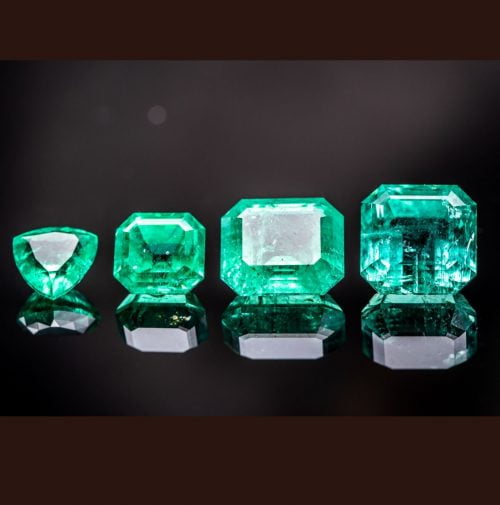 Natural Emerald Gemstone
Price range: $300.00 through $550.00
Natural Emerald Gemstone
Price range: $300.00 through $550.00

Connect me