
Which Planet Is Blocking Your Success Right Now?

Ready to turn stuck days into steady progress? This short guide shows how to use your birth details to spot the planet that might be slowing momentum on work, money, or goals.
We keep it practical. You’ll learn how to gather the right time and date data, generate a natal chart, and read a clear report that points to patterns repeating in your life.
Instead of blaming one force, we explain how signs, one key house, and planetary links shape where friction shows up. You’ll get a simple roadmap from data to action.
This friendly how-to focuses on immediate wins: what to do first, what to try next, and how to use your name and birth date to get useful reports without overthinking.
Key Takeaways
- Grab accurate time and date details before you start.
- Use a natal chart and report together for clear insights.
- One planet often points to a pattern, not a full cause.
- Look at the sign and house to see the style and setting of the challenge.
- Turn findings into a short, practical list of next steps.
Why your astrology chart can reveal roadblocks to success
An accurate natal snapshot often exposes the repeating patterns that stall progress before you even notice them.
Think of your birth chart as a map of energy at your start time. It shows positions that repeat as habits, delays, or friction.
Planets point to the “what” of a struggle. For example, Saturn often brings delays; Mars warns of rushed moves.
Signs describe the “how”—a practical earth sign will react differently than a bold fire sign. The house reveals the “where”: career, money, or relationships.
“With a simple framework—planet (what), sign (how), and house (where)—interpretations become practical and focused.”
- Use a short list to log repeating pain points.
- Match those items to chart positions and a clear report.
- Apply quick experiments tied to the interpretation and re-check results.
Small, testable steps based on reports turn symbolic notes into real fixes. This keeps astrology useful and action-focused.
How to get a precise Birth Chart today and avoid common data-entry mistakes
Accurate results start with careful data entry and a trusted site that handles time zones for you.

Name, date, and time: keep entries simple and private
Use an initial or nickname, or leave the name blank to stay anonymous. Tools use your date and time, not your identity, to calculate a report.
Enter the legal local time at birth exactly as recorded. Do not add daylight saving—reputable chart services auto-adjust for DST and historical rules.
Unknown time and the Moon or cusps
If the exact time is unknown, pick “Time Unknown” to skip houses and the Ascendant. For a quick daily snapshot, enter noon.
To test variation, compare positions at 00:01 and 23:59—this shows how the Moon and cusps might shift.
Place, time zones, verification, and settings
Type the city only, then pick the correct location from the dropdown. If a “Time Zone Not Sure” box appears, change only the numeric value and keep the sign.
For edge cases or rounding near 0°00′ email reports@cafeastrology.com to double-check positions and offsets.
| Field | Common error | Quick fix | When to email |
|---|---|---|---|
| Name | Full legal name (unnecessary) | Use initial or leave blank | If site links identity to report |
| Time | Adding DST manually | Enter legal local time; let site adjust | If time zone looks wrong |
| Place | Wrong town with same name | Select exact dropdown location | When site can’t find location |
“Small input corrections make a big difference in the clarity of your final report.”
Find the planet blocking your progress and how to work around it
Spotting one stubborn planet in your natal report helps you focus fixes that actually move the needle. Start by scanning the report for Saturn and Mars, then compare those positions to the chart wheel to see where friction repeats.
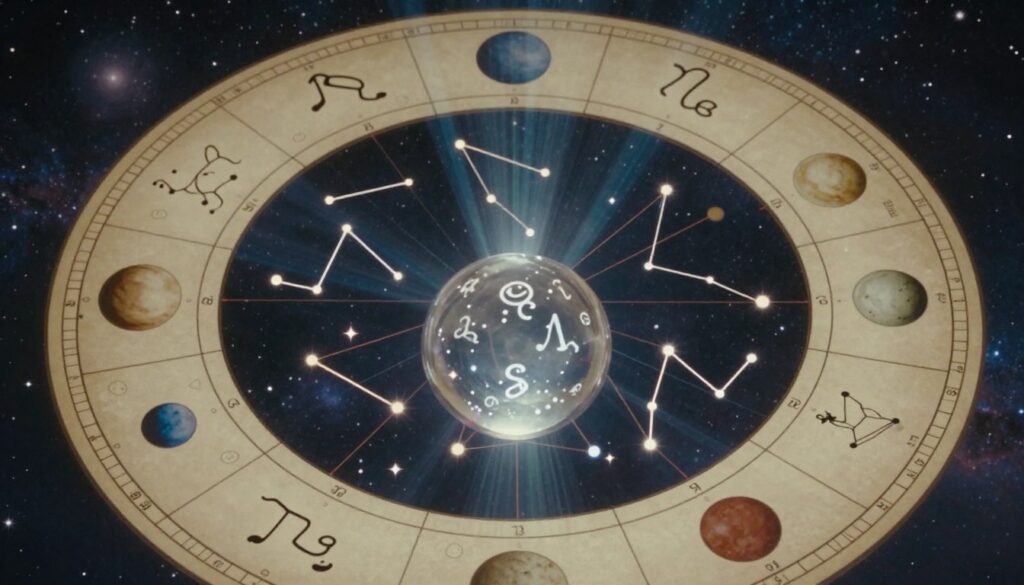
Read your natal chart results: Saturn, Mars, and the Midheaven
Look first for Saturn and Mars placements in your report. Saturn often signals slowdowns that demand structure. Mars can show scattered energy or conflict that drains momentum.
Check hard aspects to the Midheaven (MC). Squares or oppositions tied to Saturn or Mars often map to stalled launches, promotion delays, or public tension.
House and sign positions: where the challenge shows up and how to navigate it
Note the house a challenging planet sits in to pinpoint the life arena. For example, Saturn in the 2nd house calls for tighter financial systems. Mars in the 6th asks for clearer daily boundaries.
Read the sign to learn style. Fixed signs resist quick change; mutable signs scatter energy and do better with short, repeatable plans.
From report to action: turn interpretations into a short, testable list
Convert findings into one small list: accept one constraint (Saturn), set one boundary (Mars), and schedule one habit on your calendar. Use your site’s saved reports to track results every two weeks.
- Compare Placidus and Koch if a planet sits on a cusp; choose the system that matches your lived results.
- If a position looks odd (0°00′ or a time offset), email support before big decisions.
“Turn one insight into a habit and watch what changes in two weeks.”
Conclusion
Summarize with a short plan: one insight, one action, one review. Use accurate birth data and the generated chart to spot the planet that most often stalls progress.
Lean on a concise report and the sign and house notes to decide a single, small experiment. Trust a reliable site that auto-adjusts time zones and shows the correct place so your inputs stay clean.
When results look ambiguous, cross-check positions and read both angles. With practice, these quick reports and repeatable steps will turn old roadblocks into steady, measurable wins on the page of your life.
FAQ
Which planet is most likely to be blocking my success right now?
How can an astrology chart reveal roadblocks to success?
What should I enter for name, date, and time to get a precise reading?
My time of birth is unknown. Should I select “Time Unknown” or use noon?
How should I enter place of birth to avoid errors?
Do I need to handle time zones and DST myself?
How can I verify my chart’s accuracy after entry?
Which house system should I use and how do settings affect results?
Can I save or share my chart, and how is my data handled?
How do I identify the planet blocking my progress and what to do about it?
Where in the chart will challenges usually appear and how can I navigate them?
How do I turn a written interpretation into real progress?
Are there common data-entry mistakes to avoid when ordering a report?
Can support help if my chart shows unexpected positions or contradictions?
About Me:

Musa Hossain, A Modern Astrologer, Palmist, Occultist Scientist and Gemologist
Our Astrological Gemstone
-
 Natural Red Coral
Price range: $225.00 through $400.00
Natural Red Coral
Price range: $225.00 through $400.00
-
 Natural Blue Sapphire
Price range: $1,500.00 through $3,000.00
Natural Blue Sapphire
Price range: $1,500.00 through $3,000.00
-
 Natural Sea Pearl
$400.00
Natural Sea Pearl
$400.00
-
 Natural Yellow Sapphire
Price range: $350.00 through $650.00
Natural Yellow Sapphire
Price range: $350.00 through $650.00
-
 Natural Emerald Gemstone
Price range: $300.00 through $550.00
Natural Emerald Gemstone
Price range: $300.00 through $550.00

Connect me