Palmistry + Astrology: The Rare Method to Predict Your Real Destiny

This friendly review article tests an integrated palmistry and astrology system that aims to clarify your destiny without locking you into fatalism.
We explain the core idea: your hand maps life patterns and your birth chart times key windows. Together, the system gives practical steps to shape your future.
By “destiny” we mean a trajectory you can influence through awareness and action, not an inevitable concept that strips away agency.
In this article we outline what’s inside the system, how easy it is to use, who benefits, and where it has limits. We compare the combo to stand-alone readings to see if the union gives clearer, more actionable insights.
Our testing uses structured case reviews and repeatability checks so the verdict rests on method, not opinion.
Expect a nonjudgmental, practical tone that borrows a few game metaphors for learning levels, while keeping usability and ethics front and center.
Key Takeaways
- This review evaluates a combined palmistry + astrology system for practical life guidance.
- Core promise: hand patterns + birth chart timing produce clearer choices.
- We test usability, scope, strengths, and repeatability with structured cases.
- “Destiny” is treated as influenceable trajectory, not rigid fate.
- Comparison with single-method readings checks whether the combo adds value.
- Tone stays friendly and useful for modern seekers and players of self-growth systems.
Overview: Why This Palmistry + Astrology Method Deserves a Closer Look
When hand-lines meet transit windows, you get practical guidance rather than a single story. The system blends palmistry’s personal line maps with astrology’s cycle-based timing to give richer content for decision-making.
It organizes activities like story missions, strikes, and raids as learning events. Beginners start at an easy level and progress through structured missions that build skill and confidence over time.
The goal is empowerment, not imposed fate. Repeatable steps help players connect patterns to choices while keeping agency intact. Practical exercises turn reflection into real-world action.
“This approach treats fate and destiny as related but distinct, and focuses on caused timing rather than decreed outcomes.”
- Clear modules: short walkthroughs and mission-style tasks.
- Pacing: events and levels prevent overload.
- Motivation: level-up structure keeps players engaged.
| Feature | Beginner | Advanced |
|---|---|---|
| Modules | Intro missions, hand-basics | Timing deep-dives, case files |
| Activities | Short events, guided exercises | Complex scenarios, long raids |
| Outcome | Practical starter plans | Refined strategies and timing |
What We’re Reviewing: A Combined System Rooted in Ancient Fate Traditions
This system ties old myths and modern timing into a clear, usable framework. It frames two related ideas simply: fate is often cast as fixed and unavoidable, while destiny describes a broader trajectory you can navigate with informed choices inside life’s order.
Ancient stories shaped how societies understood predetermined outcomes. The Greek Moirai, Roman Parcae, and Norse Norns personified limits on humans and gave dramatized examples of woven life threads.
Over time, interpretations shifted. Determinism treats events as caused links in a chain, not divine decrees. Ming yun in Chinese thought blends what is given with shifting circumstances, which fits the system’s past-future threadwork.
How this method positions itself
- Original integration: the review tests a coherent series of modules, not a random mashup.
- Practical focus: fewer spectacle stories, more steps players can use at each level.
- What players get: clear terminology, key hand/chart patterns, and staged learning so the chart-and-hand story remains easy to follow.
“We evaluate whether these philosophical roots translate into everyday utility, not just interesting theory.”
How the Method Works: From the Hand to the Heavens
Reading the hand and the chart together gives a practical map for planning moves and managing windows of opportunity. The approach treats the palm as a real-time snapshot and the chart as the clock that schedules missions in a clear order.
The hand as a tactile map
Lines, mounts, and skin texture show tendencies an individual carries now. They act like a diagnostic screen: short lines can signal quick cycles; deep lines suggest enduring themes.
Players use this read to set a starting level—what feels stable, what needs work, and where expansion is possible.
Timing: charts, cycles, and windows
The birth chart supplies time frames—transits and progressions—that sequence tasks. Think of planetary events as game events that open or close supportive time windows.
That pacing keeps missions doable and prevents forcing change at the wrong moment.
Blending present checks with timing
The system pairs hand diagnostics with chart timing so a player knows when to act and when to wait. Modules follow a simple flow: observe, interpret, act.
Safeguards require corroboration from both sources before big steps. This avoids overreach and keeps control with the player rather than slipping into fatalism.
“Patterns suggest probabilities; choices still steer the outcome.”
Destiny Defined: What This Review Means by Destiny
To avoid confusion, we set a practical definition of destiny before testing the method’s claims. In this review, destiny is a direction you can influence through awareness and action, not an unchangeable script.
Key distinctions that matter
Fate implies inevitability and often removes choice. We treat fate as a different idea than destiny.
Determinism describes causal chains and explains how past causes shape events over time. That keeps the model practical and grounded for humans planning next moves.
How fortune and order fit in
Fortune (chance) appears as unexpected events. The system teaches preparation and response rather than trying to control all things.
Order means patterns and tendencies. Patterns suggest likely windows, not commands. We look for alignment before acting toward the future.
“This review keeps definitions clear so players can set the right level of interpretation and use guidance as useful content for real decisions.”
- Assessment focuses on clarity, module consistency, and real-life fit over time.
- The system helps a player choose interpretation level: balance intuition with structure.
- Final aim: craft a path within constraints, not surrender to inevitability.
Features & Content: What’s Inside This System
What follows is a compact tour of the materials, missions, and shared assets players use to learn.
Core modules: hands, planets, and timing
Core modules break the method into three clear tracks. First, life lines and major palm features teach quick, tactile reads.
Second, planetary rulerships map themes to areas of life. Third, timing techniques show when to act.
Activities and missions that convert insight into action
Guided missions move players from observation to doing. Short activities include journaling prompts, communication drills, and career experiments.
Each mission ends with concrete steps and checkpoints so learners can test results before moving up a level.
Shared assets and archived original case files
The system stores templates, checklists, and archived original notes that are shared across sessions.
Example case files in the series show wins and common pitfalls. Players can retrieve March-sourced walkthroughs and compare methods.
“Templates and archived originals shorten the learning curve and help players repeat successful moves.”
- Game modes: solo practice, mentor feedback, group review.
- Progression: beginner orientation → intermediate synthesis → advanced timing stacks.
- Periodic events and timed windows keep cadence and allow planned expansion.
| Module | Focus | Outcome |
|---|---|---|
| Life Lines | Diagnosis | Starter plan |
| Planetary Rulerships | Themes | Aligned goals |
| Timing Techniques | Scheduling | Action windows |
Testing the Method: Our Review Process, Criteria, and Results
We created standardized events and missions so each player faced comparable challenges during testing.
Protocol: define review questions, collect baseline data, perform hand + chart readings, set actions, and measure results after a fixed window.
Case studies: pivotal moves and observable events
We ran three focused case sets: career pivots, relationship decisions, and health or lifestyle changes. Each case had clear milestones and measurable outcomes.
Repeatability and control: reducing bias in readings
Bias reduction used blind checks, cross-validation between hand signals and chart timing, and uniform note-taking across levels.
“Control conditions compared outcomes when timing was ignored versus when action aligned with cycles.”
Results: specific, time-bound missions with converging signals improved outcomes. Neutral or missed cases occurred when signals conflicted or when a single data point drove action.
| Test Element | Best Outcome | Limit Observed |
|---|---|---|
| Timed missions | Higher follow-through | Requires accurate timing |
| Cross-validation | Improved confidence | More steps needed |
| Control comparisons | Clear effect size | Not always possible |
In short, repeatability rose with disciplined process. Players gained confidence as they advanced levels and refined their play.
User Experience: Ease of Use, Learning Curve, and Guidance
New users meet the method with a short orientation that lays out palm landmarks, chart essentials, and a progress map.
Onboarding is step-based: an intro tour shows key palm features, a chart basics module, and a visual map so a player sees what comes next.
The learning curve is managed with short modules and optional deep dives. Check-ins and micro-tasks prevent overwhelm and keep each level achievable.
Guidance modes include self-paced study, scheduled mentor sessions, and community threads that act like a social space for support.
The interface organizes content clearly: templates, case examples, and FAQs sit in one menu so players find what they need fast.
Accessibility choices use plain-English explanations, step-by-step illustrations, and sample interpretations to demystify advanced techniques.
Common enemies of learning—confusion and overinterpretation—are handled with prompts, short examples, and guardrails that keep players aligned with best practice.
Optional tools like a glossary, trackers, and progress logs let a player monitor growth and plan expansion without losing structure.
“A friendly UX balances exploration and scaffolded support so players can learn the game at their own pace.”
Accuracy & Limits: Where the System Shines and Where It Doesn’t
This section tests how well pattern matching between hand markers and chart cycles tracks real-life outcomes over months and years.
Strengths in pattern recognition over time
The method excels at spotting recurring signals. When similar line changes and repeated transit hits appear across sessions, players often see measurable events follow.
Consistency across multiple readings raises confidence. That makes the system useful as a decision-support tool and a timing guide rather than a one-off fortune.
Limits: free will, context, and changing life “modes”
Free will and context matter. Energy, resources, stress, or sudden external events can change outcomes even when patterns look clear.
Reliability drops when signals conflict or when one indicator is over-weighted. Misses in our tests came from health shocks, financial disruption, or literal misreads of a symbol.
“Patterns point to possibilities; people still choose which path to take.”
Practical guardrails:
- Act in smaller steps and test outcomes before big moves.
- Require corroboration from at least two modules before high-stakes actions.
- Routinely reevaluate after each level or cycle and document results.
| Area | When Accurate | When Unreliable |
|---|---|---|
| Pattern recognition | Repeated hand-chart convergence over time | Single-session reads or isolated markers |
| Timing | Aligned transits and clean windows | External disruptions or wrong birth time |
| Decision support | Small, staged experiments and checkpoints | High-stakes bets without cross-checks |
Bottom line: This is a tool for players who want order and practical timing in their game of life. It improves with documentation, cautious expansion, and feedback loops. You remain the active character choosing moves, weapons, and strategies—this method merely helps you pick a better level and time to act.
Comparisons: How It Stacks Up Against Single-Discipline Readings
A direct contrast helps players pick the right tool for specific missions and life events.
Palmistry alone gives a clear snapshot of current strengths and constraints. It excels at diagnosis: who you are now, what resources you carry, and where tension sits.
The blended approach pairs that snapshot with timing. When hand signals meet transit windows, players know not just what to change but when to act.
Palmistry-only versus blended approach
Palmistry-only is fast for setting a starting plan. It helps in immediate decisions and short drills.
Blended reduces guesswork by adding scheduling cues. That cross-check raises confidence before major moves.
Astrology-only versus integrated core insights
Astrology-only maps cycles and events well. It tells you when doors open or close.
The integrated core grounds those windows in the palm’s present signals. Together they form an ordered flow: observe, time, act, review.
“Cross-validation across modules often turns a hunch into a clear plan—and that matters when stakes rise.”
Modes of learning—solo, mentor-led, and group—help players apply content consistently. Shared across formats, templates and checklists support repeatable play.
- Stand-alone reads: quick insight, light setup.
- Blended system: deeper checks, better timing, less chance of misread events.
- Best fit: career pivots and relationship turning points where timing and readiness must align.
| Method | Strength | Limit |
|---|---|---|
| Palmistry-only | Immediate state diagnosis | No timing context |
| Astrology-only | Clear cycle planning | May miss present readiness signals |
| Blended approach | Cross-checked timing + readiness | Requires practice and tracking |
Bottom line: single-discipline reads still play a role, but the integrated model raises the odds you’ll see patterns clearly and act at the right moment. That makes the game of life easier to play for players who want order and practical expansion.
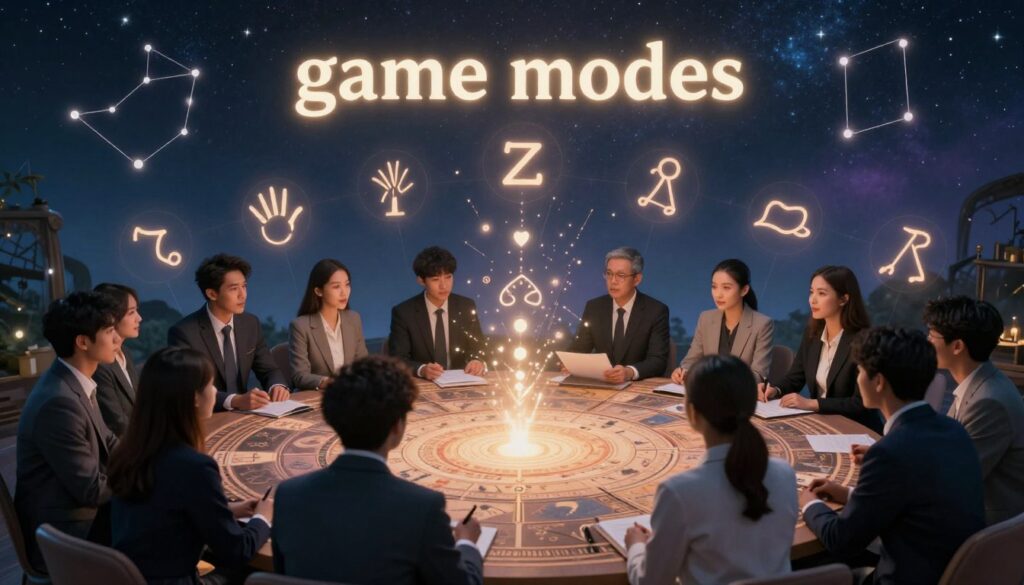
Design & Delivery: Content Organization and “Game Modes” of Learning
Design ties content flow to player needs so learning feels purposeful and easy to return to. The layout groups material into clear paths so players pick the right pace and stick with practice.
Solo study, mentor-led sessions, and group social hubs
Solo study offers flexible playlists and short drills. Players can pause, replay, and test ideas without pressure.
Mentor-led sessions provide targeted feedback and correction. These sessions help reduce persistent mistakes and speed up skill gains.
Group social space acts as a hub for peer support, accountability, and shared case review. The new social features encourage critique, celebration, and collaboration.
Level progression, rewards, and archived original materials
The system uses level-based progression with clear milestones. As players show proficiency, advanced timing techniques and synthesis unlock.
- Archived original notes, case files, and templates form a searchable reference library.
- Rewards include badges, certificates, and access to advanced clinics for completed series challenges.
- Progression supports steady expansion without overload.
Navigation, mode switching, and reducing learning enemies
The platform’s space organizes sessions, replays, and resources so players return after breaks without losing their thread. Switching between solo play and mentor review improves retention.
“Checklists, timely prompts, and short examples keep confusion and inertia at bay.”
Play is a friendly metaphor here; the structure remains evidence-focused and ethical. Together, these modes make the content usable and reliable for long-term growth in destiny work.
Value Over Time: Pricing, Upgrades, and Long-Term Support
Value over time depends less on a one-time buy and more on steady content, events, and meaningful rewards. Long-running platforms bundle base modules with optional expansion packs so players can add depth at their own pace.
Pricing is tiered: a base level covers core missions and templates. Mid tiers add mentor hours and seasonal clinics. Top tiers include advanced timing workshops and one-on-one review sessions.
Upgrade paths let players enable tracks when they are ready. That avoids upfront costs for tools a learner won’t use yet.
- Long-term rewards: repeatable templates, quarterly clinics, and community Q&A that extend value beyond year one.
- Support for returning users: refreshers, re-onboarding guides, and an active social space to re-engage quickly.
| Tier | Includes | Best for |
|---|---|---|
| Base | Core content, starter missions | New players |
| Growth | Workshops, templates, events | Committed learners |
| Pro | Mentors, deep clinics, archived case files | Advanced level work |
“The best value comes when learners document outcomes, revisit patterns, and align new missions with evolving priorities.”
Cost-benefit: pick a level that matches your goals to avoid overbuying. With steady content drops and a supportive community, the platform becomes a long-term game for players who want measured growth and real rewards.
Who It’s For: Individuals, Couples, and Life Transitions
The system adapts: individuals can sharpen habits, couples can align timing, and people in transition can map risk for major moves.
Individuals use the tools to clarify direction and line up timing windows. Short missions translate insight into daily habits. That builds momentum toward your future without huge leaps.
Couples compare charts and hand patterns to map shared goals and communication styles. Paired reads reveal supportive windows for joint decisions and reduce missteps when timing matters.
Life transitions—career changes, moves, or commitments—get a simple roadmap and checkpoints. Players can stage small tests, lower risk, and document results before big commitments.
“A clear story of past patterns and timed windows helps people move with more confidence.”
- Scales well: quick wins for busy schedules and deeper dives for expansion.
- Custom pace: choose the right game level and part of the method to match time and energy.
- Support: mentors and community spaces provide accountability and compassionate feedback.
Start points: individuals begin with a short diagnostic mission; couples try a shared session; transition players build a three-step plan with timing checkpoints. Each path aims to turn pattern into progress, not passive prediction of destiny.
Ethics & Responsibility: Humans, Control, and the Concept of Choice
A clear ethical frame keeps the method useful and respectful of each person’s agency. The system offers guidance, not guarantees, and honors human dignity at every step.
Fate narratives can feel final. Responsible practice stresses incremental control through informed actions and small experiments instead of absolute claims.
Mentor sessions and community spaces follow consent and privacy norms. Notes stay confidential, and participants give permission before case discussions. That protects humans and builds trust.
We are transparent about limits and uncertainty. Patterns change over time, so readings are framed as possibilities for testing, not fixed outcomes of destiny.
- Avoid prescriptive advice: no health, legal, or financial directions—refer to licensed professionals.
- Handle sensitive topics carefully: discourage dependency and promote critical thinking.
- Practice order: observe, interpret, act, review—always with respect for choice.
“Ethical guidance lets players use the game to grow, not to give away control.”
Advanced Pathways: Deep-Dive Activities for Power Users
For learners who want to level up, this section focuses on layered practice that turns insight into high-impact action.
Power users combine careful tracking with staged challenges so the game of growth becomes repeatable and measurable.
Timing stacks for major missions
Advanced timing stacks merge transits, progressions, and directed techniques to schedule critical missions. Use multiple clocks to pick windows with the highest odds.
Stacking reduces guesswork: if two or three streams align, the chosen time is usually stronger for a big move. Treat timing like a weapon in your toolkit.
Story mapping and the past–future thread
Story mapping weaves past victories and failures into a clear narrative that points to next steps. Draft a short life arc that links themes, then test it against current lines and chart cycles.
This method helps players translate history into a plan for expansion and clearer mission goals.
- Test multiple hypotheses: run small experiments, track outcomes, and corroborate signals across modules.
- Archived original: study case files to see nuanced reads and how interpretations changed over time.
- Practice modes: alternate solo sprints, mentor critiques, and small-group labs to stress-test complex windows.
- Watch for enemies: use checklists and peer review to beat confirmation bias and tunnel vision.
- Build a toolbelt: templates, trackers, and quick-reference tables speed analysis and improve repeatability.
“Power practice pairs precise timing with clear storywork so players choose better missions and scale their game with confidence.”
Plan periodic retreats or intensive sessions to consolidate learning, set the next-quarter missions, and calibrate effort to your current level and time available.
Pros & Cons
This section weighs clear benefits against practical trade-offs so players can decide if the method fits their goals.
Pros
- Integrated insight: combining hand signs with chart cycles gives clearer guidance and cuts down guesswork when planning action toward your destiny.
- Structured system: a core progression with levels and checkpoints improves repeatability and helps a player track growth over time.
- Practical activities: short missions and templates turn insight into behavior change and speed up expansion of skill.
- Transparency: archived original case notes and examples build trust and help players avoid common things that skew readings.
Cons
- Learning curve: the structured approach can feel steep at first; pacing and mentor options ease onboarding.
- Input sensitivity: accuracy drops when birth time is wrong; the system teaches how to use ranges and confirm signals.
- Overinterpretation risk: without cross-checks, readers can overreach; this review stresses corroboration and small tests.
Net assessment:
For most users, benefits outweigh drawbacks if they use safeguards: staged missions, peer review, and documented checkpoints.

| Aspect | Why it helps | Watch for |
|---|---|---|
| Integration | Cross-checks raise confidence | Conflicting signals need extra review |
| Structure | Levels and templates boost repeatability | Initial slope can slow adoption |
| Practice | Missions make change measurable | Skip tests and you risk misread events |
| Documentation | Archived original files support transparency | Requires disciplined note-taking |
“Use small experiments and cross-validation to keep the game manageable and the enemies of bias at bay.”
Verdict: Should You Try This Rare Method Now?
This verdict summarizes whether the blended palmistry-astrology system is worth a player’s time and attention.
The short answer: yes, with caveats. If you want a practical, ethical way to align action with timing, this integrated method offers clear value for real-life planning.
Why it works: structured modules, sample case files, and community space raise completion and satisfaction rates. When hand signals and chart transits converge, the strongest rewards appear.
Expect a manageable learning curve. The order of steps—observe, time, act, review—helps avoid rushed choices. Regular note-taking and periodic check-ins increase usefulness over the long term.
- Bottom line: try the base track, then scale up as you see wins.
- Best for: players facing career or relationship events who want timing and readiness aligned.
- Guardrail: this is guidance, not fate—practice small tests before big moves.
“Use the game’s structure to build power steadily; the system is a tool, not a script.”
| Decision | When to Use | Expected Reward |
|---|---|---|
| Starter path | Curious beginners, limited time | Clear steps, quick wins |
| Mid-tier study | Committed learners | Stronger signals, higher confidence |
| Advanced stack | High-stakes events | Refined timing, greater control |
Final note: this review finds the method stands out for clarity, structure, and real-world fit. If you want a game-like tool that helps shape your future, it is worth testing with small, repeatable missions.
Conclusion
This final note ties the method’s practical tools to real-world use and next steps.
Combine palmistry’s present-state map with astrology’s timing windows to form a clear path for intentional change. The system offers structured content, short missions, and supportive resources that keep momentum and make progress repeatable.
Remember: your life story stays yours to author. Patterns and timing are guides; you choose the actions and the level of risk. Use ethical guardrails—avoid absolutes, corroborate signals, and match steps to your confidence and context.
Start with a baseline assessment and one or two focused missions. Review outcomes, iterate, and use archived original examples (retrieved March) and series updates through the year to refine play and expansion.
Approach this game with curiosity and care. Thanks for reading—wishing you clarity and confidence on your next steps toward a mapped, meaningful destiny.
FAQ
What is the palmistry + astrology method described in this review?
This method blends classic palmistry — reading the hand as a map of individual life patterns — with natal astrology, using birth charts, time windows, and planetary rulerships to add timing and context. It frames destiny as a mix of recurring patterns, personal choice, and external cycles rather than absolute predestination.
How does the system define destiny versus fate or fortune?
Destiny here means the core tendencies and likely life themes shown by palm lines and planetary placements. Fate or fortune refers to specific events or outcomes influenced by timing techniques and cycles. The system emphasizes pattern recognition over determinism and preserves space for free will and changing life modes.
What practical features are included in the program?
The system includes core modules on life lines, planetary rulerships, timing techniques, activities and “missions” to practice readings, templates, archived original notes, case files, and shared materials across sessions. It supports solo study, mentor-led sessions, and group social spaces for feedback.
How does timing work — can it predict exact events?
Timing techniques in the program use transits, progressed charts, and palm-cycle correlations to highlight likely windows for change. They point to heightened probability for events, not guaranteed specifics. The method helps users prepare and act rather than promise exact dates.
How accurate are readings from this combined approach?
Accuracy is strongest at recognizing long-term patterns and probable life phases. Repeatability improves when case files include verified birth times and archived original observations. Limitations arise from imprecise birth data, contextual changes, and overinterpretation by the reader.
Who benefits most from this system?
Individuals facing career shifts, relationship decisions, or life transitions gain immediate value. Couples and anyone interested in structured self-reflection also benefit. Power users seeking advanced timing and story-mapping activities will find deeper pathways useful.
What is the learning curve and user experience like?
The curriculum is structured for step-by-step progression with level-based modules, rewards, and practical exercises. Beginners may need time to learn symbols and timing; mentor-led sessions shorten the curve. The interface supports archived originals and shared templates to speed learning.
Are there ethical concerns with using this method?
Yes. Practitioners must avoid deterministic language, respect clients’ autonomy, and disclose limits. The program includes guidance on responsible practice and emphasizes human choice, consent, and contextual sensitivity to reduce harm from misapplied insights.
How does this blended approach compare to palmistry or astrology alone?
Blending adds cross-checks: palm lines offer tactile, present-moment signals while astrology supplies historical cycles and timing. Each discipline can confirm or nuance the other, improving confidence in readings versus single-discipline approaches.
What tools or materials should I have to practice this method?
Essential tools include a clear photo or scan of the hand, an accurate birth time and date for chart work, notebooks for archived original notes, templates, and access to charting software or ephemerides. The system also recommends structured exercises and example case files.
How are case studies and results evaluated in the review?
The review used controlled case studies focused on pivotal life events, career moves, and relationships. It applied repeatability checks and bias controls, comparing predicted windows to later outcomes and documenting archived original notes for transparency.
Can the method adapt to someone who changed careers or beliefs?
Yes. The approach reads current hand markers and chart cycles to account for life changes and new personal priorities. Story mapping exercises help integrate past and future threads so users can revise goals without being locked into prior interpretations.
What are the main limitations of this system?
Main limits include dependence on accurate birth time, reader skill, and the risk of overinterpretation. It also cannot fully predict random external events or remove the role of free will in shaping outcomes.
Is there ongoing support or updates for the program?
Many offerings include long-term support, upgrades, and community sessions in a social space where templates and archived originals are shared. Check the provider’s policy for specific upgrade paths and event schedules.
What results can I expect after practicing the activities and missions?
Regular practice yields clearer pattern recognition, better timing judgments, and more confident life planning. Users typically report improved insight into career timing, relationships, and major events after completing core modules and exercises.
About Me:

Musa Hossain, A Modern Astrologer, Palmist, Occultist Scientist and Gemologist
Our Astrological Gemstone
-
 Natural Red Coral
Price range: $225.00 through $400.00
Natural Red Coral
Price range: $225.00 through $400.00
-
 Natural Blue Sapphire
Price range: $1,500.00 through $3,000.00
Natural Blue Sapphire
Price range: $1,500.00 through $3,000.00
-
 Natural Sea Pearl
$400.00
Natural Sea Pearl
$400.00
-
 Natural Yellow Sapphire
Price range: $350.00 through $650.00
Natural Yellow Sapphire
Price range: $350.00 through $650.00
-
 Natural Emerald Gemstone
Price range: $300.00 through $550.00
Natural Emerald Gemstone
Price range: $300.00 through $550.00

Connect me