
Modern Astrology for Real Life Problems (Not Just Predictions)
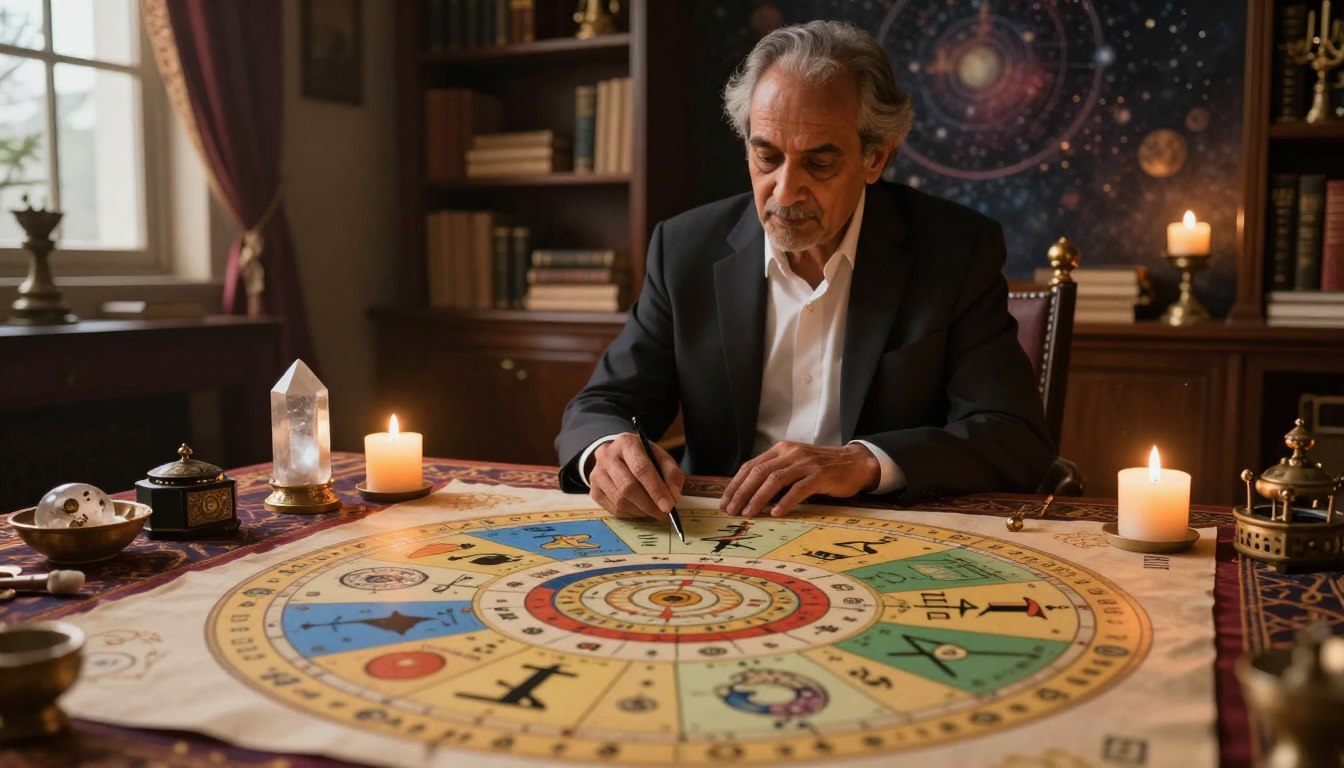
Vimshottari timing is a practical map that shows when certain forces in your chart gain influence. In vedic astrology this system lays out a 120 years cycle that divides life into clear periods. Each span ties to a planet and marks windows for action, planning, and care.
Think of it as a schedule, not fate. The method links natal placements, house strength, aspects, and yogas to real-world events. When a strong planet rules, you often see visible results in work, money, or health. When a weak ruler leads, outcomes need strategy and caution.
This guide turns classic theory into useful steps for career moves, family timing, and personal priorities. You’ll learn how to read windows of time, spot likely events, and direct your energy where the odds favor success.
Key Takeaways
- Vimshottari gives a clear 120 years roadmap for life timing.
- Periods show which planet’s energy rules and when to act.
- Strength, placement, and yogas shape actual results.
- Use timing to plan career, money, health, and family steps.
- This guide translates technical rules into plain, practical advice.
What Planetary Dashas Are and Why They Matter in Modern Life
Dashas map how time in your chart unfolds, turning abstract cycles into usable moments. In vedic astrology this system treats time as a cycle that activates houses and themes. When a period begins, that planet’s energy highlights specific life areas and events.
The hierarchy matters: a mahadasha covers years, the antardasha narrows it, and pratyantar, sukshma, and prana refine timing down to days or hours. Accurate pratyantar and prana readings need a precise birth time.
This method is useful for planning real-world moves—interviews, launches, purchases, or health checks—because it shows when your chart’s promises are likely to surface.
Remember: the acting planet’s strength, dignity, and connections decide outcomes. The moon-based nature of the system ties timing to the mind and feelings, so periods often match how events feel as much as what happens.
- Practical: Use periods to align effort with higher odds.
- Precise: Finer subperiods need exact birth data.
- Predictive: Useful for career, growth, marriage, and finances.
Planetary Dasha Basics in Vedic Astrology
A planet’s time in your chart works like a lens, tinting events with a certain tone and energy. That tone depends on its sign, house, aspects, yogas, and overall strength.
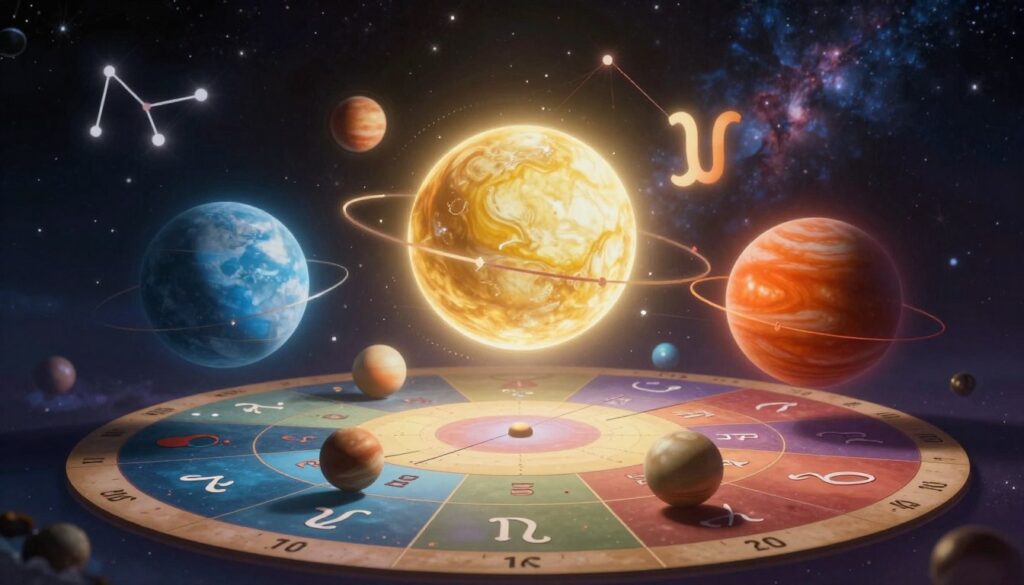
Dashas as karmic “conditions”
Frame each period as a condition that colors your life. A strong, well-placed ruler often brings clear gains in health, money, or recognition.
Classical terms matter: a Poorna term (very strong) tends to deliver abundance. A Rikta term (powerless) often underperforms and asks for caution.
How chart factors shape results
Houses affect outcomes three ways: where a planet occupies, which houses it owns, and which houses it aspects. Together these define where effects appear.
Sign and position—exalted, own, friendly, or debilitated—change quality. Kendra and trikona placements usually boost results. Combustion, malefic aspects, sandhi, or inimical signs can weaken a period.
- Varga & ashtakavarga: extra points that lift average outcomes to standout results.
- Afflictions: delays, tests, or course corrections when a planet is harmed.
- Balanced analysis: no single placement tells the whole story—consider all factors together.
Takeaway: know your planet’s placement and condition in the birth chart to predict whether a period will push forward, consolidate gains, or require repairs and patience.
Vimshottari Dasha: The 120-Year System Most Astrologers Use
Vimshottari maps life in clear stretches so you can see when themes rise and fall. This system is anchored to the moon and the nakshatra at your birth, which tracks inner rhythm and felt timing very well.
Why a moon-and-nakshatra base is accurate
The moon governs mood and day-to-day shifts. Tying timing to the moon’s nakshatra makes predictions match how you experience events. That link gives psychological precision to the windows it shows.
The full 120 years and their durations
Vimshottari totals 120 years. The ordered durations are:
- Ketu 7 years
- Venus 20 years
- Sun 6 years
- Moon 10 years
- Mars 7 years
- Rahu 18 years
- Jupiter 16 years
- Saturn 19 years
- Mercury 17 years
How the starting point and outcomes are set
Your first mahadasha begins with the lord of the moon’s janma nakshatra at birth. The remaining balance is proportional to the moon’s placement inside that nakshatra. Practical note: the system uses a 365.25-day year for accurate long-term duration.
The ruling planet of each span brings general themes: Venus often brings love and comfort; Jupiter can mean growth and wealth; Rahu or Ketu can trigger sudden shifts. Sign, position, and aspects always modify the likely results.
Action tip: map your current period against your birth chart to time study, career moves, and wealth-building with better odds.
Sub-Periods for Precision: Antardasha, Pratyantar, Sukshma, and Prana
Nested timing layers sharpen long trends into short windows where real results show up. Each mahadasha breaks down into antardasha (bhukti), then pratyantar, and finer sukshma and prana slices. These layers cut a broad season into specific weeks, days, or hours when events tend to crystallize.
How sub-periods narrow outcomes
Think of the large span as the general direction and the smaller slices as the exact moments things happen. The last antardasha of a period often signals the next major shift, preparing transitions in work, finances, or family with less friction.
Car and driver analogy
The mahadasha is the car; the antardasha is the driver. A skilled driver can make the trip smoother, but the car’s capacity still limits speed and comfort. Likewise, a strong planet in an antardasha can improve results, yet the mahadasha sets the overall limits.
- Read the mahadasha themes first, then filter by the antardasha planet’s condition.
- Use transits to pick dates inside the narrowed window for important events.
- For pratyantar, sukshma, and prana accuracy, you need a precise birth time.
- If birth time is approximate, antardasha-level planning still helps with timing decisions.
How to Read Results: From Houses and Yogas to Positive/Negative Outcomes
Reading results means tracing where a planet’s influence lands in the chart and what it actually does there.
Activation logic
During a planet’s period, check three things in order: the house it rules, the house it occupies, and the places it aspects. Those points are where most effects and results show up.
Strength versus affliction
Strong placement—exaltation, own or friendly sign, and kendra/trikona position—usually increases positive outcomes and growth.
Afflictions like combustion, sandhi, nodal contacts, or harsh malefic aspects can split outcomes into positive negative themes or create delays and challenges.
The Moon and health
The moon acts as a barometer of mind and health. A weak Moon often links to emotional strain and physical issues even in otherwise successful periods.
Timing nuances
Classics note a pattern: the early phase echoes the occupied house, the middle highlights the planet’s sign, and the closing phase shows the modifying aspects.
- Cross-check yogas: if a yoga-forming planet runs its time, its results often appear, modified by condition and transits.
- Document wins and issues: track sub-periods to refine your personal analysis and timing choices.
Beyond Vimshottari: Choosing the Right Dasha System for Your Goal
Different timing frameworks serve different goals—choose the system that answers your specific question.
Ashtottari uses a 108-year cycle tied to nakshatras. It excludes Ketu and often feels more spiritual. Use it when moon conditions call for a more inward, soul-focused reading.
Yogini runs a 36-year loop through eight Yoginis. Its alternating positive/negative tendency gives a quick pulse for short- to medium-term planning.

Kalachakra and Chara
Kalachakra or “Wheel of Time” is very sensitive to moon nakshatra and is best left to experienced astrologers. It excels at mundane, geopolitical, or high-stakes predictions.
Chara (Jaimini) is sign-based and keyed to key karakas. It is powerful for questions about fame, public image, and career stature.
Specialized Windows
Shoola highlights urgent, critical windows, including life-or-death timing. Sudarshana synthesizes Lagna, Moon, and Sun charts for a holistic read and works well as a confirmatory layer.
“Match the method to the goal, and confirm key dates with a second system for high-stakes moves.”
- Use Vimshottari for everyday planning; pick Chara for visibility or Kalachakra for national events.
- Ashtottari (108 years) leans spiritual; Yogini (36 years) is a short-cycle check.
- For major decisions, cross-check with more than one system to confirm timing and influence.
Planetary Dasha for Real Life: Career, Love, Health, and Family in the United States
Aligning major moves with strong periods in your chart turns chance into strategy for career, love, and finances. Use these practical rules to time interviews, proposals, purchases, and health checks in a U.S. setting.
Career and recognition
For work and recognition, favor runs of the Sun, Mercury, Jupiter, or Saturn. Sun periods boost status and leadership roles.
Mercury helps communication, tech, and study; Jupiter aids growth and advisory paths; Saturn rewards steady effort in operations and compliance.
Love and marriage
Pick Venus or a well-placed Moon for proposals and weddings. Check the darakaraka and 7th house activation to time relationship milestones.
When Venus runs well, relationships deepen; when the Moon is strong, domestic comfort and family ties improve.
Money, assets, and prosperity
Time 401(k) boosts, home offers, or major purchases during Jupiter, Venus, or stable Saturn spans. Pause or renegotiate in stressed Rahu, Ketu, or Mars sub-periods.
If your birth chart shows 6th/8th/12th house activation, add caution and extra savings.
Health and challenges
Use Mars, Saturn, or Rahu warnings to schedule checkups, rest, and stress management. A weak Moon signals mental strain—set firm workplace boundaries.
Practical tip: plan big decisions in favorable antardashas and use short pratyantar windows to sign contracts or close on homes when indicators align.
- Family: Moon/Jupiter/Venus spans suit leave, childcare moves, and relocations for better prosperity.
- Risk management: Delay high-leverage trades and add emergency savings when nodes hit risk houses.
Conclusion
Timing turns promise into planning. Use the Vimshottari 120‑year map from vedic astrology as a tool to move through life with intent.
The Moon‑anchored start at birth sets each mahadasha’s arc, and the early, middle, and late phases reflect house, sign, and aspect influences on a planet’s influence.
Sub‑periods sharpen those windows so you can pick days for contracts, health checks, or launches. Results depend on strength, placement, and yogas; outcomes lean positive or negative based on condition.
For big commitments, confirm timing with an extra dasha system or a second method. Document events during each period to learn how your chart speaks in real time.
Respect the timing, work the plan, and let aligned effort compound into steady wealth and stability.
FAQ
What is the practical purpose of modern Vedic timing systems?
How does the mahadasha system connect to a birth chart?
Why is the Vimshottari 120-year cycle widely used?
What are antardasha and pratyantar, and why do they matter?
How do houses and yogas change a period’s outcome?
What role does the Moon play in timing and results?
Can other dasha systems be more useful than Vimshottari?
How do you use dashas for career and recognition in the U.S. context?
How should I time major financial moves like buying a house or investing?
What remedies or mitigations help during difficult periods?
How precise are nested sub-periods for predicting events?
Do dashas predict only big events like marriage or death?
How do nodes (Rahu and Ketu) affect period outcomes?
Can two people born close together share the same timing effects?
Is it possible to prepare in advance for a challenging period?
About Me:

Musa Hossain, A Modern Astrologer, Palmist, Occultist Scientist and Gemologist
Our Astrological Gemstone
-
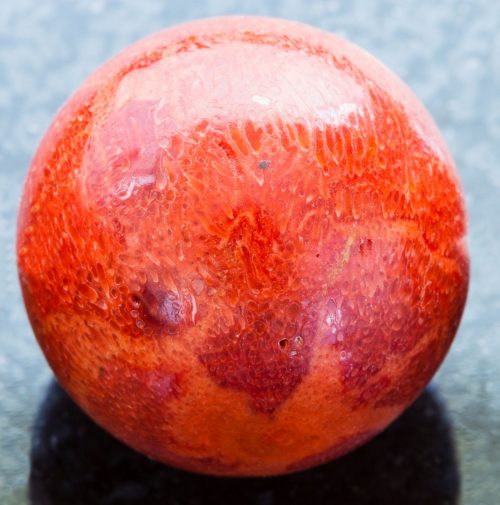 Natural Red Coral
Price range: $225.00 through $400.00
Natural Red Coral
Price range: $225.00 through $400.00
-
 Natural Blue Sapphire
Price range: $1,500.00 through $3,000.00
Natural Blue Sapphire
Price range: $1,500.00 through $3,000.00
-
 Natural Sea Pearl
$400.00
Natural Sea Pearl
$400.00
-
 Natural Yellow Sapphire
Price range: $350.00 through $650.00
Natural Yellow Sapphire
Price range: $350.00 through $650.00
-
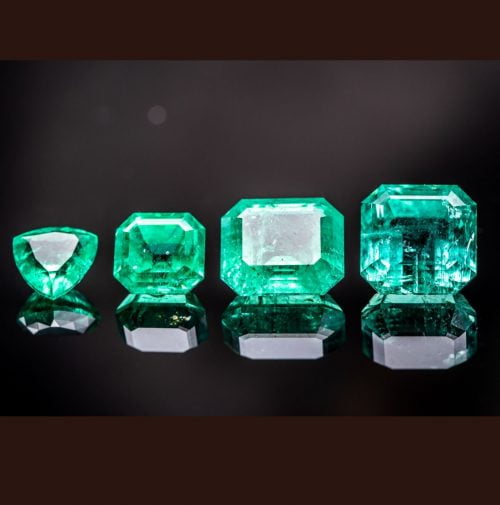 Natural Emerald Gemstone
Price range: $300.00 through $550.00
Natural Emerald Gemstone
Price range: $300.00 through $550.00

Connect me