
How Transits Activate Your Astrological Houses
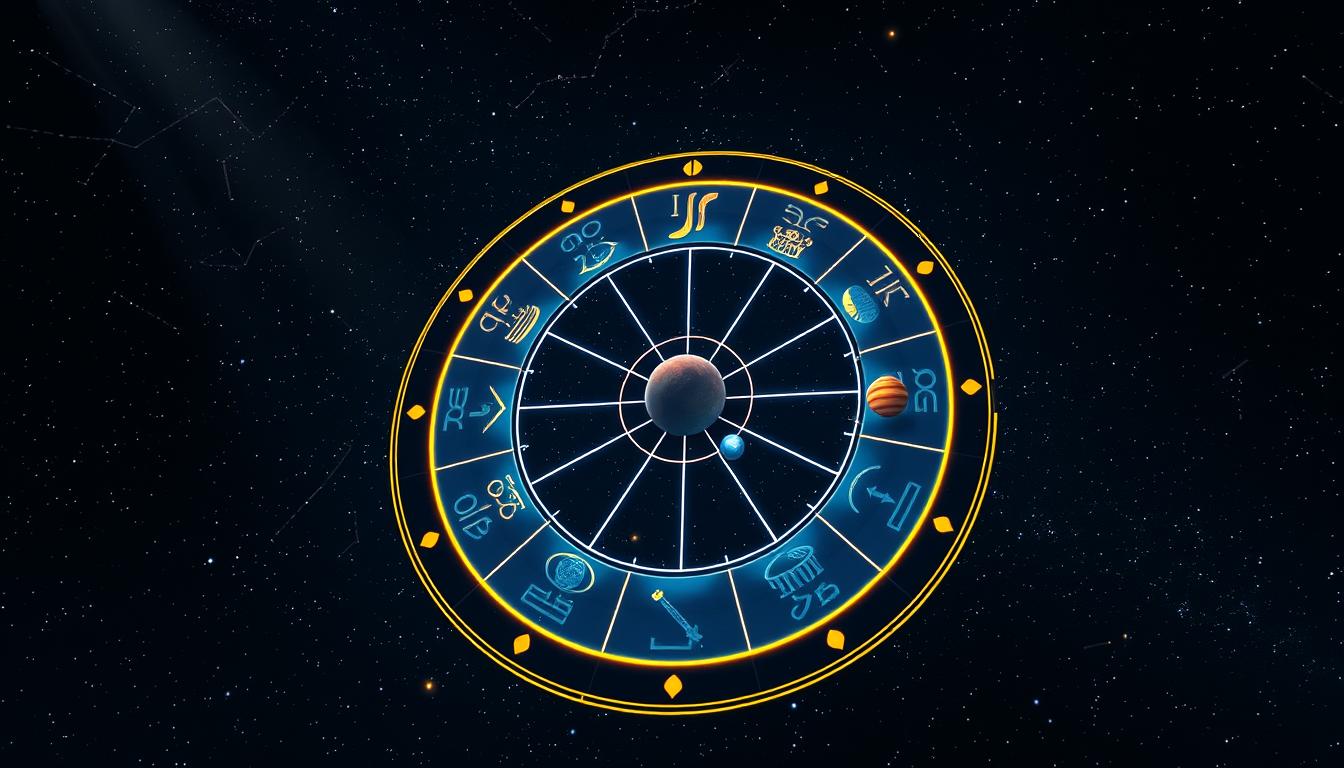
Your birth chart is a permanent blueprint. It’s a snapshot of the sky from your first breath. But the planets never stop moving.
These ongoing planetary movements are called transits. They interact with the fixed points in your personal blueprint. This dynamic interaction activates different areas of your life over time.
Think of it like a clock. A clock doesn’t cause time; it reflects it. Similarly, transits don’t force events. They mirror the cycles and themes unfolding in your world.
Learning to read these cycles is powerful. It helps you feel connected to the natural rhythm of personal growth. You move from a static list of placements to seeing your chart as a living, turning wheel.
This comprehensive guide will show you how. We’ll cover house systems, planetary movements, and aspects. You’ll learn practical tools and real-life applications.
Whether you’re learning to predict events or want to personalize general forecasts, this is for you. The most straightforward method starts by seeing which area of your chart, or house, a moving planet activates.
Key Takeaways
- Your natal chart is a fixed blueprint from your moment of birth.
- Transits are the ongoing movements of planets through the sky.
- These movements activate different areas of your life chart over time.
- Transits reflect life’s cycles; they do not directly cause events.
- Understanding this process helps you feel connected to natural timing.
- The guide will teach you to read your chart as a dynamic wheel.
- Knowing which house a planet transits is the key to interpretation.
Understanding Astrological Transits
The sky above is never still. Its shifting patterns engage with your personal cosmic design. These ongoing celestial movements are called transits. They form angles to the fixed points of your birth map.
Your natal chart is a snapshot from your first breath. Planets, however, keep moving through the zodiac. This creates a continuous dialogue between your blueprint and the cosmos.
What Are Transits?
Transits are the current positions of planets across the sky. They interact with the fixed planetary positions of your birth chart. Think of it like a clock reflecting time rather than causing it.
Planetary alignments mirror earthly events. They don’t force things to happen. This perspective helps you see cycles as natural reflections.
The Role of Planetary Movements
Moving celestial bodies activate potentials already part of your psychological makeup. They highlight and trigger parts of your own nature. Most people feel these stimulations unconsciously.
Mood changes, life events, and relationship dynamics can be signs. Understanding this ongoing conversation helps you navigate life with greater awareness. The effect depends on both the traveling planet’s nature and the natal point it touches.
| Dynamic Aspect | Traveling Celestial Body | Natal Fixed Point |
|---|---|---|
| Activation | Triggers latent potential | Holds innate blueprint |
| Timing | Reflects current cycle | Represents birth moment |
| Influence Type | Temporary stimulation | Permanent foundation |
How Transits Influence Your Natal Chart
Predicting a transit’s influence begins with one simple step: locating its position in your natal chart. This is the most straightforward method. It shows which life area will be highlighted.
Moving planets activate potentials already present in your psychological makeup. They don’t create new traits. Instead, they illuminate and trigger what’s already there.
Interpreting House Positions
Where a planet travels tells the story. The corresponding sector of your personal map dictates the theme. Professional astrologers prioritize this house position above all.
It turns general forecasts into personal guidance. The same celestial movement affects two people differently. Your individual blueprint provides the essential context.
Chart Patterns and Personal Impact
Knowing your chart’s sensitive points is key. Dominant signs or areas react more strongly. Major configurations like grand crosses or T-squares create focal points.
These patterns respond with greater intensity to planetary passages. Understanding your own structure helps you anticipate significant periods. It connects cosmic timing to your unique journey.
The Power of Transiting Planets in Astrology
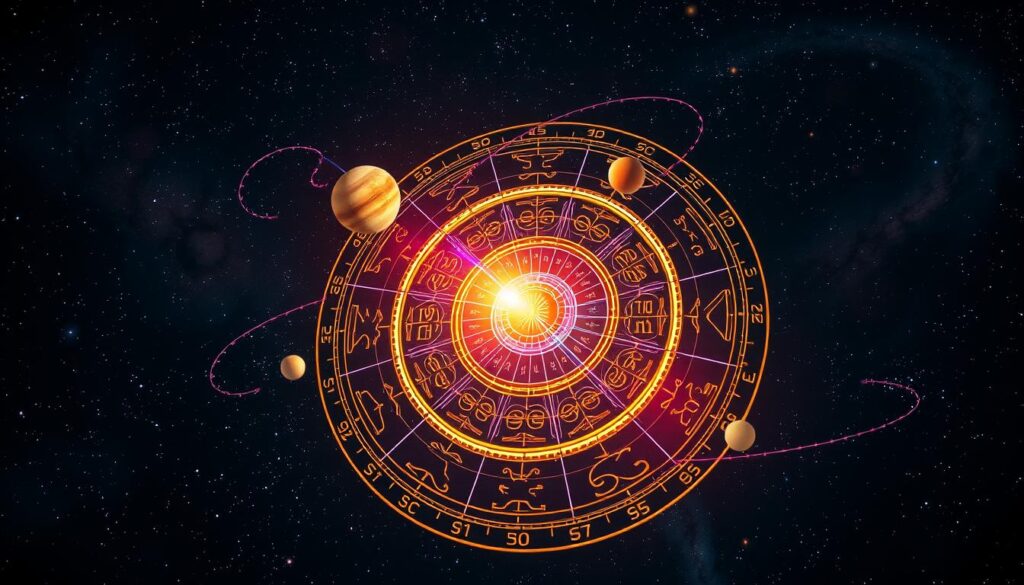
Understanding the power of transiting planets requires distinguishing between slow crawlers and swift movers. Their speed dictates the duration and depth of their effects on your life.
Outer Planets vs. Inner Planets
Outer planets like Pluto, Uranus, and Saturn move very slowly. They create long-lasting life chapters. These heavy planets often go retrograde, touching a sensitive point multiple times.
Pluto transits work slowly and deeply. They transform by decaying what you must release. Uranus brings sudden disruptions and breakthroughs.
Saturn tests areas it touches, offering lessons through frustration. Jupiter and Mars move at intermediate speeds. They stimulate growth and action.
Personal planets (Sun, Moon, Mercury, Venus, Mars) zip along quickly. They manifest as shorter, noticeable events.
| Planet Type | Orbital Speed | Effect Duration | Primary Theme |
|---|---|---|---|
| Outer (Pluto, Uranus, Neptune, Saturn) | Very Slow | Years (Life Chapters) | Transformation, Disruption, Discipline |
| Intermediate (Jupiter, Mars) | Moderate | Months | Expansion, Energy, Stimulation |
| Personal (Sun, Moon, Mercury, Venus, Mars) | Fast | Days/Weeks | Daily Events, Communication, Relationships |
Exploring the Significance of Astrological Houses
Imagine your life as a wheel with twelve spokes. Each spoke represents a different area of your existence.
These sectors are called houses. They cover everything from identity and resources to partnerships, career, and spirituality.
Your rising sign, or ascendant, sets the entire structure. It always sits in your first house. This point is the anchor for your personal map.
House Systems and Rising Signs
Reading your chart as a wheel is crucial. It shows how life areas connect. A simple list of placements misses this dynamic view.
Your exact birth time is essential. The ascendant changes about every two hours. This precision ensures accurate house placement.
The whole sign system is highly recommended for beginners. It assigns one zodiac sign per house. This creates clear, easy-to-read charts.
Other methods like Placidus or Koch are also valid. They use complex calculations based on time and location.
| House System | Calculation Method | Primary Trait |
|---|---|---|
| Whole Sign | One sign per house | Clarity and simplicity |
| Placidus | Time and latitude based | Most common in Western practice |
| Koch | Emphasizes the midheaven | Focus on career and public life |
For free, accurate birth charts, visit astro.com or astro-seek.com. These sites let you save multiple charts.
Houses answer the question “where?” They show the life arena where planetary energies will manifest. The same moving planet activates different areas for different people. Your unique rising sign determines this.
Navigating Transits in Astrology Houses
The whole sign house system offers a straightforward key to understanding which life areas planets will activate. This method assigns one complete zodiac sign to each sector of your personal map.
It turns complex calculations into simple, reliable guidance. Knowing your rising sign reveals the entire structure at a glance.
Using the Whole Sign House System
If your ascendant is Leo, the sign of Aquarius always occupies your seventh sector. Every planet moving through Aquarius is transiting your 7th house.
This means Aquarius transits, like Pluto’s current journey, always speak to seventh house themes. These include close relationships, business partnerships, and legal agreements.
Consider Adam Levine’s chart as a concrete example. His Leo ascendant means all Aquarius transits activate his relationship sector for their entire duration.
Such movements can bring partnership opportunities or challenges. They increase awareness of how you relate to others.
While a planet remains in a house for months or years, its effects peak during exact alignments with your natal planets. Understanding this structure helps you anticipate focus areas during different planetary cycles.
Decoding Aspects and Planetary Alignments
Aspects are the dynamic conversations happening between moving planets and your natal placements. These geometric angles create specific types of energetic interaction.
They turn a simple position into a meaningful event. The dialogue’s nature depends on the exact angle formed.
Hard Aspects: Squares, Oppositions, and Conjunctions
Prioritize hard aspects first. Conjunctions, squares, and oppositions create the most intense experiences.
A conjunction blends two energies into one focus. A square creates friction that demands growth through challenge.
An opposition brings awareness through polarization or external mirrors. You feel these angles most profoundly.
Effects peak when a planet is within 3 degrees of an exact angle to your natal planet.
Harmonious Aspects and Their Subtleties
Trines and sextiles offer easier energy flow. They represent natural talents and flowing opportunities.
These supportive angles can sometimes pass unnoticed. Conscious effort may be needed to harness their potential.
Hard aspects often bring external events that force change. Harmonious ones provide gentle support.
| Aspect | Angle | Key Effect |
|---|---|---|
| Conjunction | 0° | Merges and intensifies energies |
| Sextile | 60° | Offers easy opportunities |
| Square | 90° | Creates friction and growth challenges |
| Trine | 120° | Provides natural flow and talent |
| Opposition | 180° | Brings awareness through contrast |
Focus on angles to your personal planets and chart points for the most personal interpretation.
Tools and Techniques for Reading Your Transiting Chart
An ephemeris is your essential guide to planetary movements. This tool lists daily celestial positions by degree and zodiac sign.
You can find it online or in book format. Use it to track when planets approach your natal points.
Utilizing Ephemeris and Online Birth Charts
Check an ephemeris to see when a planet gets within 3º of an exact aspect. Cross-reference your birth data with current listings.
This process highlights upcoming significant periods. Professional astrologers consult this data to time consultations and plan events.
For accurate personal charts, use free websites. Astro.com and astro-seek.com are reliable resources.
| Feature | Astro.com | Astro-seek.com |
|---|---|---|
| Free Chart Generation | Yes | Yes |
| Account Storage | Up to 100 charts | Limited |
| User Interface | Detailed & Customizable | Simple & Fast |
| Additional Tools | Ephemeris, AstroClick | Quick Calculators |
Always view your chart as a circular wheel. This visual shows house positions and aspects clearly.
Combining an ephemeris with your birth chart lets you anticipate life themes. You can prepare for important cycles months in advance.
Living with Transits: A Personal and Practical Approach>
Living consciously with planetary cycles doesn’t mean watching the clock every minute. A balanced approach focuses on your direct experience. Check celestial movements when you feel a mysterious shift in your energy or mood.
This way, cosmic timing becomes a tool for understanding, not a source of anxiety. We are here to have a life journey and grow. Moving planetary energies can be viewed as teachers guiding us through different stages.
Embracing Life Cycles and Lessons
All talk of “good” or “bad” transits comes from the ego. It wants comfort and resists necessary challenges. From a higher perspective, there is no fortune or misfortune—only learning.
This meta view sees all cycles as neutral opportunities. Your task is to remain curious about what each phase wants to show you. People benefit most when they balance awareness with direct living.
For example, the Moon’s movement is often felt as changing moods. Its instinctual energy can bring unconscious feelings to the surface. When it aligns with a natal planet, you might feel sudden impulses.
Note these moments. They are clues from your deeper self, framed by the cosmic context. This practical work helps you flow with life’s natural rhythm.
Integrating Transits into Life and Relationships
Adam Levine’s public relationship crisis in 2022 offers a clear case study in how transiting planets integrate multiple life themes. This real-world moment shows celestial movements touching down in our personal world.

Impact on Partnerships and Personal Growth
When a planet moves through your seventh sector, it directly activates all committed bonds. This includes romantic relationships, marriages, and business partnerships.
Legal contracts and negotiations also fall under this area of life. The Adam Levine example is instructive. Saturn was transiting his 7th house, conjunct his natal Venus, and square his midheaven.
This layered activation brought seventh house themes of relationships into public view. Venus themes of love and values were stressed. The midheaven angle pulled it all into his career and public image.
Such periods ask you to examine how you show up in all kinds of partnerships. They can highlight projections or shadow work needing attention.
Career, Public Image, and Life Themes
Movements to your midheaven or tenth sector focus energy on professional life. Your public reputation and achievements come into the spotlight.
New Moon conjunctions to a natal planet create a fresh start. If it touches your Venus, love or money matters get renewed focus for a month.
The monthly Moon-Sun conjunction is a personal “power day.” Your vitality and emotional alignment peak. The two-year Mars cycle shows your energy waxing and waning.
It’s highest when Mars nears your natal Mars sign. Understanding these rhythms helps you flow with natural timing. You can offer better support when a partner experiences challenging planetary passages.
Retrograde periods revisit themes, giving multiple chances to integrate the energies. The way these events manifest depends on your conscious awareness and willingness to work with them.
Conclusion
By now, you understand that celestial cycles are not random events but meaningful reflections of your growth. Moving planets activate potentials already woven into your natal chart. They stimulate, but do not create, your life patterns.
Knowing which sector of your chart a planet travels through provides the core context. This house position tells you the life area being highlighted. Outer planet movements shape long-term chapters, while inner ones time specific events.
Combining this location with the angles it forms to your natal planets creates a complete picture. Use an ephemeris and free online charts to track these cycles. With practice, this work becomes intuitive.
Approach all kinds of planetary passages as neutral teachers. A balanced awareness enhances your journey without causing anxiety. You have the foundation to read your own cosmic timing with confidence.
FAQ
How do transits affect different areas of my life?
Planetary transits activate specific houses in your birth chart, bringing focus and energy to different life themes. For example, a planet moving through your 7th house highlights partnerships and one-on-one relationships, while a transit through your 10th house can bring career developments into focus.
What is the difference between my natal chart and transiting planets?
Your natal chart is a snapshot of the sky at your birth, showing your core personality. Transiting planets are the current movements of planets like Jupiter or Saturn. Their path across your chart wheel indicates the timing of events and evolving personal themes.
Why is the house system important for interpreting transits?
The house system you use, like Whole Sign or Placidus, determines where your chart angles and house cusps fall. This directly shapes which life area a transiting planet will influence. Your rising sign sets the entire framework for your houses.
How do I know when a major transit is happening?
You can track major planetary transits using an online ephemeris or a digital birth chart service. These tools show when slower-moving outer planets, like Pluto, form significant squares or oppositions to sensitive points in your personal chart, signaling potent times for change.
Can transits predict specific events?
While transits don’t predict exact events, they reveal the likely themes and kinds of energies at play. For instance, transiting Venus in your 5th house might highlight romance or creativity, but the specific event depends on your choices and other chart factors.
How should I handle a difficult transit, like a Saturn square?
Challenging transits, such as hard aspects from Saturn, are best approached with responsibility and structure. They are life cycles meant for building resilience. Focusing on practical work in the related area of life, rather than resisting the energy, leads to personal growth.
About Me:

Musa Hossain, A Modern Astrologer, Palmist, Occultist Scientist and Gemologist
Our Astrological Gemstone
-
 Natural Red Coral
Price range: $225.00 through $400.00
Natural Red Coral
Price range: $225.00 through $400.00
-
 Natural Blue Sapphire
Price range: $1,500.00 through $3,000.00
Natural Blue Sapphire
Price range: $1,500.00 through $3,000.00
-
 Natural Sea Pearl
$400.00
Natural Sea Pearl
$400.00
-
 Natural Yellow Sapphire
Price range: $350.00 through $650.00
Natural Yellow Sapphire
Price range: $350.00 through $650.00
-
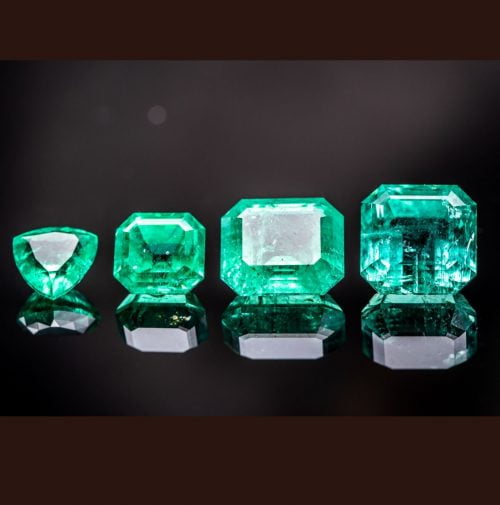 Natural Emerald Gemstone
Price range: $300.00 through $550.00
Natural Emerald Gemstone
Price range: $300.00 through $550.00

Connect me