
Best Life Partner According to Astrology – Avoid a Lifetime Mistake

Choosing the right partner can shape your entire life. Tools that use date, time, and place of birth now offer a practical way to test compatibility before you commit.
These systems combine a 36-point matching score with modern progressions to estimate spouse traits and likely timelines. Entering precise details—name, date and time of birth, and place—sharpens predictions and reduces guesswork.
Expect clear steps to compare two individuals fairly: emotional fit, household roles, family dynamics, and risk factors like Mangala Dosha parity or 7th-house challenges.
This guide shows how to interpret scores, refine timing windows, and cross-check with Western techniques so you can make a confident, repeatable decision and protect your married life and relationship satisfaction.
Key Takeaways
- Accurate inputs (date, birth time, place) are essential for reliable prediction.
- The 36-point system gives a quick view of compatibility and potential issues.
- Equalizing risk factors can be as important as a high score.
- Use Western progressions to refine timing and confirm results.
- Follow a simple step-by-step comparison to avoid long-term mismatches.
How This How-To Guide Uses Vedic and Western Marriage Astrology Today
A hybrid method pairs the classic 36-point Vedic Koota system with Western progressed charts to give both structure and timing for partner decisions.
Vedic matching scores quickly flag strengths and gaps: below 18 is poor, 18–24 acceptable, 24–32 above average, and over 32 rare and excellent. These structured points make chart comparison fast and repeatable for individuals exploring long-term commitment.
Western progressions add a time layer. Progressed charts help identify positive five-year windows when partnership, commitment, and stability trends improve for each person.
Some modern tools compute the 36-point matching and generate progressed charts in one place. That saves time and makes it easy for a reviewer or an astrologer to do a deeper read without switching systems.
- Balanced view: use both systems so you don’t over-index on one metric.
- When to escalate: low scores, complex aspects, or unclear birth times call for professional astrologers.
- Practical outcome: a repeatable way to compare two individuals and pick the best timing for commitment.
Prepare Your Birth Details for Accurate Marriage Prediction
Start by gathering exact birth data for both people. Small errors can change a chart’s angles and timing. Getting the basics right saves time and avoids misleading results.
Essential inputs: date, time (to the minute), and place of birth
Collect the full date, minute-level time, and exact place name for each person. Tools may also ask for longitude, latitude, and time zone. Double-check AM/PM and spellings.
Birth time rectification when time is uncertain
If the recorded time is unclear, a skilled astrologer can refine it. Rectification uses two or three well-documented past events — moves, jobs, or medical milestones — to zero in on the correct minute.
Friendly reminder: online tools are a baseline
Use online calculators to make a quick horoscope and see differences. For low scores or tight timing, plan a session with professional astrologers to validate the final prediction.
| Input | Why it matters | Typical impact | What to check |
|---|---|---|---|
| Date of birth | Defines core chart positions | Sign placements and house starts | Confirm day, month, year |
| Exact time | Sets ascendant and sensitive angles | Minor minutes can shift a year in timing | Verify AM/PM; use rectification if unsure |
| Place of birth | Adjusts for longitude/latitude | Local rises change house cusps | Use precise town or coordinates |
| Saved report | Paper trail for follow-up | Easier re-checks and consultations | Download and store each generated report |
Marriage Astrology: Understanding Kundli Matching and the 36-Point System
A compact score from eight Kootas gives a clear starting point when comparing two natal charts. Kundli matching sums specific tests into one compatibility number so couples and advisors can screen options quickly.
The eight kootas
Varna (1 point) checks spiritual and ego fit.
Vashya (2 points) shows lead/follow dynamics between bride and groom.
Tara (3 points) measures durability and timing support.
Yoni (4 points) maps physical attraction and intimacy patterns.
Graha Maitri (5 points) tests mental bonding and moon-sign rapport.
Gana (6 points) highlights temperament and conflict style.
Rashi/Bhakoota (7 points) assesses emotional attachment and sign affinity.
Nadi (8 points) flags health and reproductive alignment.
How the scoring works
Use the total as a screening tool. High totals point to smooth baseline compatibility, while low totals suggest areas to investigate.
| Score range | Meaning | Action |
|---|---|---|
| <18 | Poor compatibility | Not recommended; investigate Nadi and Rashi for risks |
| 18–24 | Acceptable | Look at Koota breakdown; address gaps in discussions |
| 24–32 | Above average | Good base for commitment; refine timing with progressed charts |
| >32 | Excellent (rare) | Strong compatibility; still review specific Kootas for nuance |
Tip: Keep both the total and the Koota breakdown from the kundali or horoscope to guide follow-up. A single point swing in heavy-weight Kootas can change the overall view, so use matching as an informed screening step, not the final word.
Spot and Balance Red Flags: Mangal Dosha, 7th House Aspects, and Family Dynamics
A careful look at doshas, 7th-house links, and family signals highlights issues you can address. Kuja or Mangala Dosha is not part of the 36-point score, but it is a critical risk factor that needs separate review.

Manglik vs non-manglik: aim for parity
Check mangal dosha parity first. A manglik-to-manglik pairing often balances energy, while a manglik with a non-manglik can create long-term problems.
Where Kuja fits and key exceptions
Remember this dosha sits outside guna scoring. Look for mitigating placements in the kundali that can soften the effect before discarding a match.
7th-house malefics and what they suggest
Inspect 7th-house aspects: the Sun can point to ego clashes, Mars may bring frequent quarrels, and Saturn often signals delays or disappointments. Treat these as signals to plan practical remedies, not automatic dealbreakers.
Family harmony indicators
Moon–Saturn links often show how a bride bonds with in-laws. See whether supportive planets in one chart offset hard 7th-house aspects in the other.
“Balance risk with remedies, clear expectations, and a checklist so the couple and family can act with clarity.”
- Review Mangala parity first.
- Note 7th-house malefic aspects and possible remedies.
- Weigh family links alongside the 36-point score for a full view.
Time Your Marriage and Map Relationship Patterns in the Birth Chart
Timing matters. Start by comparing both birth charts and look for when partnership houses light up at the same time. Focus on practical windows, not single transits. Use progressions to confirm a multi-month or year-long positive phase.
Marriage timing: 7th house with 2nd and 11th support; next five-year outlook
Map timing by checking the 7th house and whether the 2nd and 11th houses show activation. When those houses align, they indicate family formation and financial gains that support commitment.
Use Western progressions to validate a favorable year or window in the next five years. When both charts share overlapping progressions, the prediction gains confidence.
Love vs tradition: 5th and 11th house combinations for love marriage signals
Strong 5th–11th links favor a love marriage path. Weak or blocked links often suggest a more traditional route or delays. Track transits that activate those houses to see if a love path can accelerate.
Attraction and communication: Venus‑Mars angles; Mercury with Moon/Saturn/Jupiter
Read Venus–Mars geometry for chemistry—Ardha‑kona and Tri‑kona patterns show natural magnetism. Check Mercury’s aspects to Moon, Saturn, and Jupiter to predict how the couple will communicate and solve conflicts.
- Plan around clustered windows that appear in both charts.
- Prioritize planets that back commitment and everyday routines, not only the event date.
- Keep a simple log of key aspects so the partner and you can follow the plan.
Add Western Progressions for a Modern, U.S.-Friendly Cross-Check
Use modern progressed charts to confirm when both partners hit positive growth cycles.

Use Western progression charts to confirm positive windows for both partners
Generate progressed charts for each person and look for overlapping five-year windows. When both charts show supportive timing, the structural matching gains practical weight.
Cross-check progression signals against the 36-point matching and total points. If one chart shows hard periods while the other is calm, that imbalance can hurt compatibility and prediction reliability.
When to consult an astrologer: complex aspects, low guna matches, or rectification needs
If progressions and matching give mixed results, escalate to an astrologer or experienced astrologers. They can untangle tangled aspects, verify birth time, and suggest targeted remedies.
| What to check | Why it matters | Next step |
|---|---|---|
| Overlapping favorable progressions | Supports commitment timing | Plan milestone in that window |
| One positive, one negative chart | Creates timing mismatch | Delay or phase the event |
| Low matching points with hard progressions | Higher risk of problems | Consult experts and add remedies |
“Prioritize clarity: both partners should enter commitment in a shared positive cycle.”
- Document findings with place and life context.
- Use remedies to manage risk while keeping momentum.
From Data to Decision: A Step-by-Step Way to Choose the Right Partner
Turn chart inputs into clear actions by following a short, repeatable workflow. This way keeps both individuals and family members aligned while you test compatibility with facts.
Run the checks in this order
- Perform kundli matching and record total points plus which Kootas drive strengths or weaknesses.
- Evaluate Kuja/Mangala Dosha parity for the bride and groom; do not skip this even if points look good.
- Inspect the 7th house for malefic aspects (Sun, Mars, Saturn) and list friction factors that need boundaries or a plan.
- Review family indicators (Moon–Saturn links) so the couple can prepare for in‑law integration.
- Validate the match with Western progressions and aim for overlapping five‑year supportive windows.
If gaps appear, design remedies and practical adjustments. If gaps persist, reconsider the pairing before committing. Summarize everything on a one-page decision sheet so the bride, groom, and family see the full picture at a glance.
| Step | Action | Outcome |
|---|---|---|
| 1 | kundli matching: record points & Kootas | Initial compatibility score and weak kootas |
| 2 | Mangala parity check for bride & groom | Risk flagged or balanced |
| 3 | 7th house & key aspects review | List of friction factors to manage |
| 4 | Progressions overlap | Confirm timing for major date and milestones |
| 5 | Decision sheet & next steps | Clear plan for couple, family, and follow-up |
“Convert matching and progressions into one clear decision sheet so both partners can move forward with confidence.”
Conclusion
This blended method gives you a practical roadmap to turn chart data into clear relationship decisions.
Start with exact date, time, and place, then run the 36-point matching and check Mangala Dosha parity. Rectify birth times when needed so the kundali and horoscope reflect the real person.
Weigh total points, 7th‑house aspects, family signals, and overlapping progressions. If results conflict, use remedies, shift the date or consult an astrologer for nuance.
Balance heart and reason: protect the bride and groom by testing compatibility and timing before you commit to married life. When the main factors line up, proceed with confidence and practical harmony.
FAQ
What birth details do I need for an accurate prediction?
What if I don’t know my exact birth time?
How does the 36-point matching system work?
What is Mangala (Kuja) dosha and why does it matter?
Which 7th-house factors raise red flags for marital life?
How do I time marriage using the chart?
Can Western progressed charts help with Vedic matching?
What indicators suggest a strong emotional bond and family harmony?
How do love marriage signals appear in the chart?
When should I consult a professional astrologer instead of using online tools?
Do remedies really help balance problematic charts?
How do I choose between tradition and modern compatibility indicators?
What role do parents and in-law dynamics play in chart readings?
Is a perfect guna score required to have a happy partnered life?
About Me:

Musa Hossain, A Modern Astrologer, Palmist, Occultist Scientist and Gemologist
Our Astrological Gemstone
-
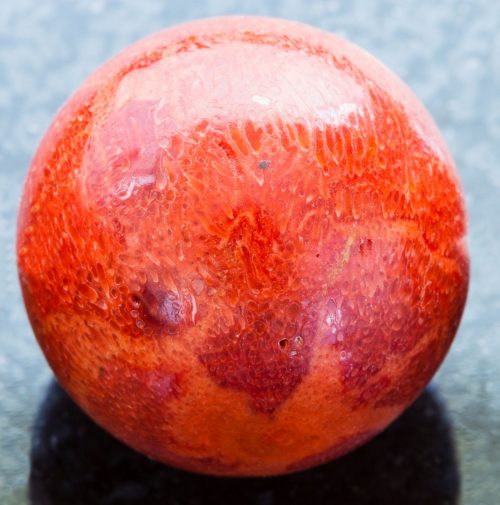 Natural Red Coral
Price range: $225.00 through $400.00
Natural Red Coral
Price range: $225.00 through $400.00
-
 Natural Blue Sapphire
Price range: $1,500.00 through $3,000.00
Natural Blue Sapphire
Price range: $1,500.00 through $3,000.00
-
 Natural Sea Pearl
$400.00
Natural Sea Pearl
$400.00
-
 Natural Yellow Sapphire
Price range: $350.00 through $650.00
Natural Yellow Sapphire
Price range: $350.00 through $650.00
-
 Natural Emerald Gemstone
Price range: $300.00 through $550.00
Natural Emerald Gemstone
Price range: $300.00 through $550.00

Connect me