Guest article. Hellenistic astrologer Roman Oleksandr explains how the Greek tradition and Jyotish (Vedic astrology) read the same birth chart. New to the topic? Start with our simpler guide, Western vs Vedic astrology: which path guides you best?
How two traditions read the same birth
Western and Vedic astrology differ in how they measure the zodiac, judge a birth chart and describe periods of life. They also belong to cultures with their own gods, stories and ways of thinking about fate. My choice of the Hellenistic tradition begins with that cultural world. Its myths feel close to me. They are part of my own story.
When I read the old Greek astrologers, the planets, the gods and the language of an ordinary life seem connected. I find that beautiful. A tradition becomes something you inhabit when its images begin to mean something to you personally.
That is why I work in the Hellenistic tradition. My experience has also given me confidence in its methods. I still cannot explain exactly how astrology works. I approach it with the possibility that the sky and our circumstances can belong to the same pattern of meaning.
Jyotish, often called Vedic astrology, interests me for similar reasons. It has its own intricate methods and a body of old writing that deserves attention. I can feel at home in one tradition and remain curious about another. That is the spirit in which I want to compare them here.
What I mean by Western and Vedic astrology
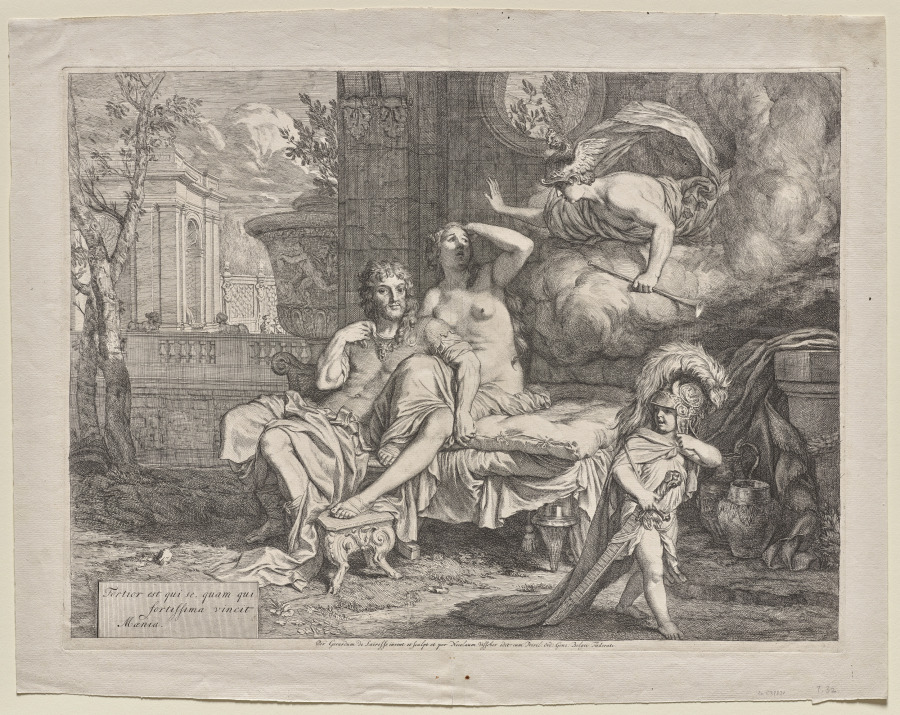
Western astrology includes several traditions. Here I am writing primarily about the Hellenistic astrology I practise, working with authors such as Vettius Valens, Dorotheus, Paulus Alexandrinus and Ptolemy. Their texts describe planetary condition, relationships between planets, the places of the chart and ways of dividing a life into periods.
Jyotish is also more varied than a single method or book. Its literature includes Varahamihira’s Brihat Jataka, Kalyanavarman’s Saravali and the text transmitted under Parashara’s name as Brihat Parashara Hora Shastra. Modern teachers can differ over interpretation and calculation. I would want the same care taken with those differences that I expect when someone describes my own practice.
The history gives us a reason for this openness. The Sanskrit Yavanajataka preserves evidence of exchange between Greek and Indian astrological learning. Bill M. Mak’s manuscript research also challenges the precise dates and simple translation history often repeated for it. He describes Greek material combined with Indian mathematics, vocabulary and cultural ideas. A book can carry a conversation between cultures within its own pages. [1]
I like that thought. The books I feel closest to belong to a history in which ideas travelled. My attachment to Greek mythology does not require a story of cultural isolation. It makes me interested in the places where familiar ideas acquire a different meaning.
The breadth of Jyotish’s literature is another reason I want to keep reading. Its classical works and commentaries offer many different minds to encounter. That is what draws me towards old books in either tradition: what an author noticed, how they reasoned, and where they disagreed with someone before them. There is room for discovery beyond the books that already feel familiar.
Why the same birth can have different zodiac signs
The most visible difference is usually the zodiac. I use the tropical zodiac, whose beginning is the March equinox. Most Jyotish practice uses a sidereal zodiac, defined in relation to a stellar reference. Both divide the circle into twelve equal signs of thirty degrees. Their starting points differ. [2]
Precession, the slow change in the orientation of Earth’s axis, changes the relationship between the equinox and the stellar background. The offset between tropical and sidereal coordinates is called the ayanamsha. There are different ways of defining it, so even two sidereal calculations need not give exactly the same longitude. [2]
For a deliberately simplified example, suppose a planet is at 15 degrees of tropical Aries and the chosen offset is exactly 24 degrees. Subtracting that offset places it at 21 degrees of sidereal Pisces. The planet has stayed in the same place in the sky. Its coordinate label has changed. The 24-degree value here is an illustration, not an offset to use for every birth.
Ptolemy explains the tropical signs through the equinoxes and solstices in Book I of the Tetrabiblos. That gives the zodiac I use an intelligible structure within his account of nature. Sidereal practitioners work from a different reference. Sidereal signs should not be confused with the unequal boundaries of the modern astronomical constellations. [2, 3]
I understand why a changed sign can feel personal. People become attached to the language through which they have understood themselves. But I would give the whole method time before deciding what the change means. A birth chart contains relationships, conditions and timing techniques that a sign description cannot carry by itself.
My preference for the Hellenistic tradition includes its aesthetics and mythology, but those sit alongside a commitment to learning its rules. Affection draws me towards the books. The work of understanding them continues after that first attraction.
What each tradition notices in a chart
In my work, an early distinction is whether the birth took place by day or by night. This is called sect. Ptolemy places the Sun and Jupiter on the daytime side, the Moon and Venus on the nighttime side, and treats Mercury according to its solar phase. Saturn belongs to the day, Mars to the night. This changes the context in which their effects are judged. [3]
From there I examine a planet’s condition: the sign it occupies, the houses it rules, its visibility in relation to the Sun, and the planets that witness or obstruct it. A planet’s name is only the beginning of the interpretation. Saturn in one chart cannot be understood by copying everything said about Saturn in another.
This is also where mythology matters to me. Valens connects Mercury with letters, interpretation, reasoning, trade and exchanges. I hear the world of Hermes in that description. The god, the planet and familiar human activities begin to speak to one another. My interest in myth helps me stay close to the meaning of those activities. The actual judgement still depends on the chart. [4]
That is also why I want the old authors to remain audible in a reading. Their terminology holds a way of seeing the world: planets looking at one another, places called Good Fortune or Good Spirit, a year entrusted to a particular ruler. I find that language beautiful because it asks me to consider relationships. A planet means something through its place among other planets, just as a passage acquires meaning through the book around it. The same care matters when reading another tradition. A translated word may look familiar while carrying a different history. I want to learn that history before deciding I already understand it.
Hellenistic astrology also uses the Lots of Fortune and Spirit: calculated points derived from the Sun, Moon and Ascendant. In Valens, their uses include distinctions between bodily circumstances and action or occupation. They help direct the reading towards a particular question. A Lot is a mathematical point, rather than another physical object in the sky. [4]
Jyotish uses twenty-seven nakshatras, divisions of the zodiac that give the Moon’s position particular importance. Vargas, or divisional charts, examine subdivisions of planetary positions; the navamsha divides each sign into nine parts. These methods have their own rules. Changing a Western chart’s zodiac setting will not reproduce them. [5]
There are recognisable concerns in both traditions, including planetary strength, rulership and relationships. Yet their rules are not interchangeable. An aspect describes which other places a planet is considered to see. In the rules given in Saravali, counting a planet’s own place as the first, each of the seven traditional planets fully aspects the seventh. A full aspect is the strongest degree of that contact in this scheme. Saturn also has special full aspects to the third and tenth places, Jupiter to the fifth and ninth, and Mars to the fourth and eighth. That differs from simply applying a Western list of aspects to sidereal positions. [6]
These differences are part of what makes Jyotish interesting to me. It asks me to notice another arrangement of the material. I would rather learn what its distinctions are doing than immediately translate every one into a Hellenistic equivalent.
How a chart describes different chapters of life
Timing is one of the parts of Hellenistic astrology that holds my attention most strongly. A chart is a picture of a beginning, but a person lives through change. Methods of timing ask which parts of that beginning become prominent at different ages and how one period relates to another.
With annual profections, the focus advances one sign for each year of life, beginning from the Ascendant. The ruler of the activated sign becomes the lord of the year. Paulus explains the sequence in chapter 31 of his Introductory Matters, then returns to the planet’s natal placement and its relationships to judge the year. Counting the signs is the beginning of the procedure. [7]
Zodiacal releasing unfolds periods from a Lot, commonly Fortune or Spirit, assigning different lengths to signs. In Book IV, Valens explicitly discusses beginning from Spirit when investigating employment or rank. This is one reason the method has a place in my approach to questions of work and direction. It gives the reading a structure across longer stretches of life. [4]
Jyotish likewise has methods that assign periods to planetary rulers. In the widely used Vimshottari dasha, the standard sequence totals 120 years, and the usual starting point depends on the Moon’s nakshatra and its progress through it. Major periods contain shorter subperiods. The 120 years describe the scheme, not a promise about anyone’s lifespan. [5, 8]
The nineteenth-century translator N. Chidambaram Aiyar explains a nine-ruler nakshatra-period system in his notes to Brihat Jataka, including Rahu and Ketu, the Moon’s nodes. Those notes also illustrate why editions matter: a translator’s explanation of a method must be distinguished from the ancient author’s own text. [8]
For a question about changing work, I would therefore want more than a statement that a particular planet is currently important. In my own framework, I would examine the planet’s natal condition and the topics it governs, then consider the timing. A Jyotish interpretation needs the corresponding judgement within its own framework.
What I find valuable here is the possibility of giving an experience a place in time. A difficult chapter can feel as though it describes the whole of a person. I want a reading to leave room for a longer life than the moment that prompted someone to ask for one.
The following comparison gathers the methods discussed here. It describes my Hellenistic approach and selected Jyotish methods; individual practitioners make further choices within each tradition.
| Part of the reading | Hellenistic approach described here | Jyotish methods discussed here |
|---|---|---|
| Zodiac | Tropical, beginning at the March equinox | Sidereal, with a specified ayanamsha |
| Planetary judgement | Sect, planetary condition, rulership and relationships | Planetary strength, rulership and graha drishti, or planetary aspects |
| Additional distinctions | Lots of Fortune and Spirit | Nakshatras and divisional charts |
| Periods of life | Annual profections and zodiacal releasing | Vimshottari and other dasha systems |
These are useful differences to know before comparing two interpretations of the same birth.
Reading the stars as signs and messages
My own inclination is towards the stars as signs we can learn to read. I sometimes think of them as messages. Life speaks through circumstances, through what meets us and what asks for our attention. Perhaps the sky belongs to that language too. That is a belief I bring to the work, and a source of its beauty for me.
There is an old philosophical voice close to this idea. In Enneads II.3.7, Plotinus writes of the stars as “letters perpetually being inscribed on the heavens” in Stephen MacKenna’s translation. His argument is that parts of a connected whole can signify what happens elsewhere within it. [9]
Plotinus also questions several astrological explanations. I find that important. He gives us a way to think about celestial signs while asking difficult questions about what the stars can actually cause. His position should not be made into a creed shared by every Greek astrologer. Ptolemy, for example, gives a substantial role to physical qualities and celestial influences in his account. [3, 9]
This is where I am comfortable leaving some mystery. I can work carefully through a technique and still be uncertain about the ultimate explanation. My experience of meaning is something I can speak about honestly. It is not scientific proof that an astrological interpretation is true.
Jyotish often places the reading within ideas of karma, action and the circumstances a life brings. It can also include remedial practices. Rao’s discussion, for example, includes mantra and charity. Those practices belong to a religious and philosophical setting that deserves to be understood in its own terms. [5]
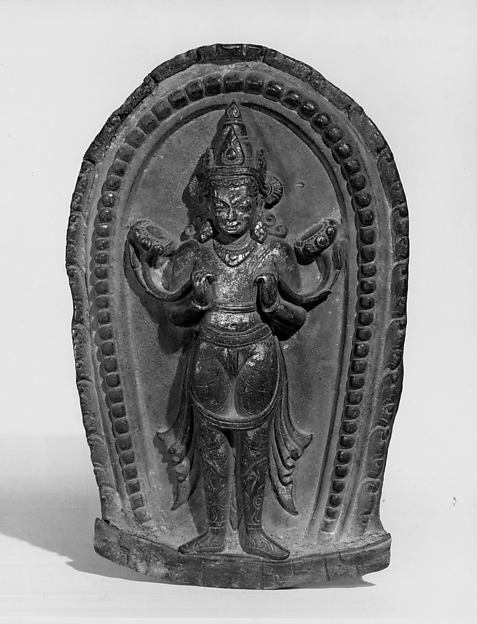
My wider interest in planetary rites has parallels here, although the Western ritual material I use includes later sources such as Agrippa. I keep that historical distinction clear: everything practised under the broad heading of traditional Western astrology is not automatically Hellenistic.
What moves me about ritual is the possibility of taking part consciously: giving attention, making an offering of time, responding to a period through something meaningful. A practice can carry that intention without becoming a promise that every desired outcome will follow. I would want the person receiving a reading to retain their own judgement and freedom.
Remaining open to another tradition
When I say Hellenistic astrology works for me, I am speaking from my practice and my experience of its language. I find its methods useful, and its culture speaks to something personal in me. I believe Jyotish can also have something valuable to tell us. That is a reason to listen and learn.
I do not need to become someone else to take that interest seriously. The Greek myths remain closer to my own story. I return to those gods and books because the connections between them continue to matter to me. Someone else may feel that same recognition in the literature and practice of Jyotish.
The useful question is what a practitioner does with the tradition they have chosen. Can they explain the method? Can they distinguish an old author’s words from their own interpretation? Can they admit uncertainty and hear the person in front of them? These qualities matter to me when I consider any reading, including my own.
If two readings disagree, I would first examine the assumptions and the reasoning. Different coordinates, different techniques and different interpreters can all contribute. Agreement does not establish proof either. The responsibility is to understand what was actually done and what kind of claim is being made.
For me, choosing a tradition is partly a matter of affinity and partly a commitment to study. Hellenistic astrology is where those two things meet. Jyotish offers another encounter with people who have looked at the sky, studied its patterns and asked what a human life means within them. I find that encounter worth having.
About the author
Roman Oleksandr is an astrologer in the Hellenistic tradition. His work brings together birth-chart interpretation, Greek myths and the old astrological texts. He prepares written readings at romanoleksandr.com.
Follow Roman on Facebook.
Sources
- Bill M. Mak, “The ‘Oldest Indo-Greek Text in Sanskrit’ Revisited: Additional Readings from the Newly Discovered Manuscript of the Yavanajataka”, Journal of Indian and Buddhist Studies 62.3 (2014), pp. 1101–1105. Paper.
- Astrodienst, Swiss Ephemeris documentation, section 2.8, especially 2.8.1 and the ayanamsha definitions. Documentation.
- Claudius Ptolemy, Tetrabiblos, I.2, I.7 and I.11, translated by F. E. Robbins (Loeb Classical Library, 1940); I.7 also checked in Robert Schmidt’s translation (Project Hindsight). Book I, chapters 1–3; chapters 4–24.
- Vettius Valens, Anthologies, I.1, II (“The Lot of Fortune and its Houseruler”), IV.4 and IV.6–7, translated by Mark T. Riley. Translator’s edition.
- P.V.R. Narasimha Rao, Vedic Astrology: An Integrated Approach (2000; author’s online edition with 2010 note): sections 1.3.5–6 on divisions and nakshatras; 6.2.9 on navamsha; 16.1–3 on Vimshottari; 34.1 and 34.3–4 on karma, charity and mantra. A modern practitioner’s account, used alongside classical sources. Author’s edition.
- Kalyanavarman, Saravali, chapter 4, verses 32–36. Accessible English transcription. This file does not identify its translator; used for a narrow paraphrase of aspect rules, not a quotation.
- Paulus Alexandrinus, Introductory Matters, chapter 31, translated by Robert Schmidt, edited by Robert Hand, Project Hindsight, Greek Track, volume I, Golden Hind Press, pp. 65–66.
- Varahamihira, Brihat Jataka, translated with notes by N. Chidambaram Aiyar, second edition (1905); especially the translator’s notes following chapter VIII, pp. 94–97. Digitised edition. These notes are not represented as Varahamihira’s original account of Vimshottari.
- Plotinus, Enneads II.3, particularly sections 1 and 7, translated by Stephen MacKenna. Text.
A Vedic astrologer’s note from Musa Hossain
At 360 Real Astrology I work in the Jyotish tradition: sidereal zodiac with the Lahiri ayanamsa, whole sign houses from the Lagna, nakshatras, divisional charts and Vimshottari dasha. If Roman’s comparison made you curious about your own Vedic chart, these free tools and guides are a good next step:
- Free Kundli calculator: your sidereal birth chart in seconds
- Nakshatra calculator and the guide to all 27 nakshatras
- Mahadasha and Antardasha explained: how Vimshottari periods work
- Divisional charts in Vedic astrology: navamsha and the other vargas
- How to calculate the houses in your birth chart
What is the main difference between Hellenistic and Vedic astrology?
Hellenistic astrology usually uses the tropical zodiac and reads charts through sect, planetary condition and Lots, with timing from profections and zodiacal releasing. Vedic astrology uses the sidereal zodiac and adds nakshatras, divisional charts and dasha periods such as Vimshottari.
Why is my sign different in Vedic astrology?
The sidereal zodiac is offset from the tropical zodiac by the ayanamsha, currently about 24 degrees with Lahiri. Many planets therefore move back one sign, although their place in the sky is the same.
Can I get a Vedic reading of my chart?
Yes. Book a birth chart reading with Musa Hossain, in Dhaka or online.